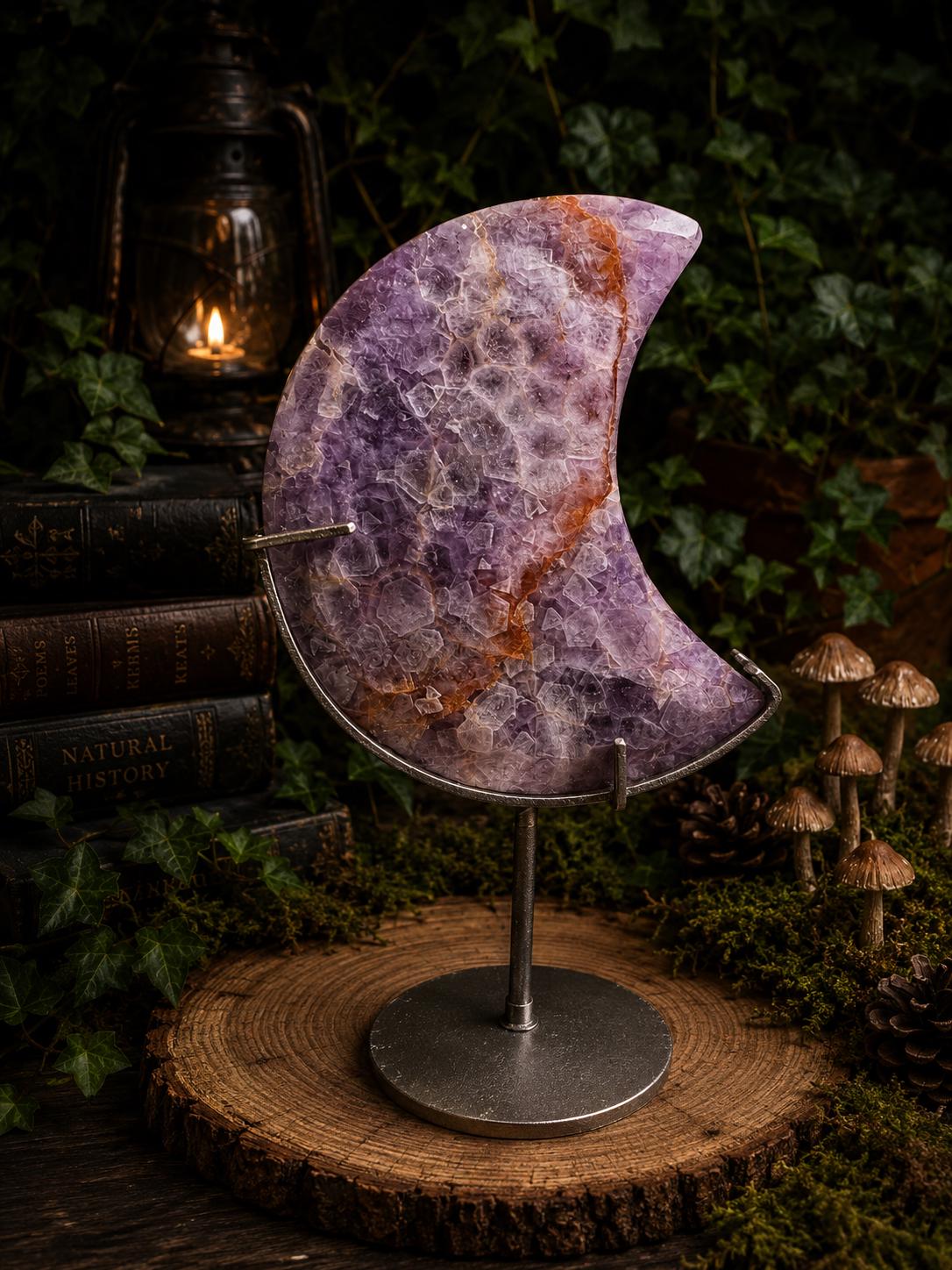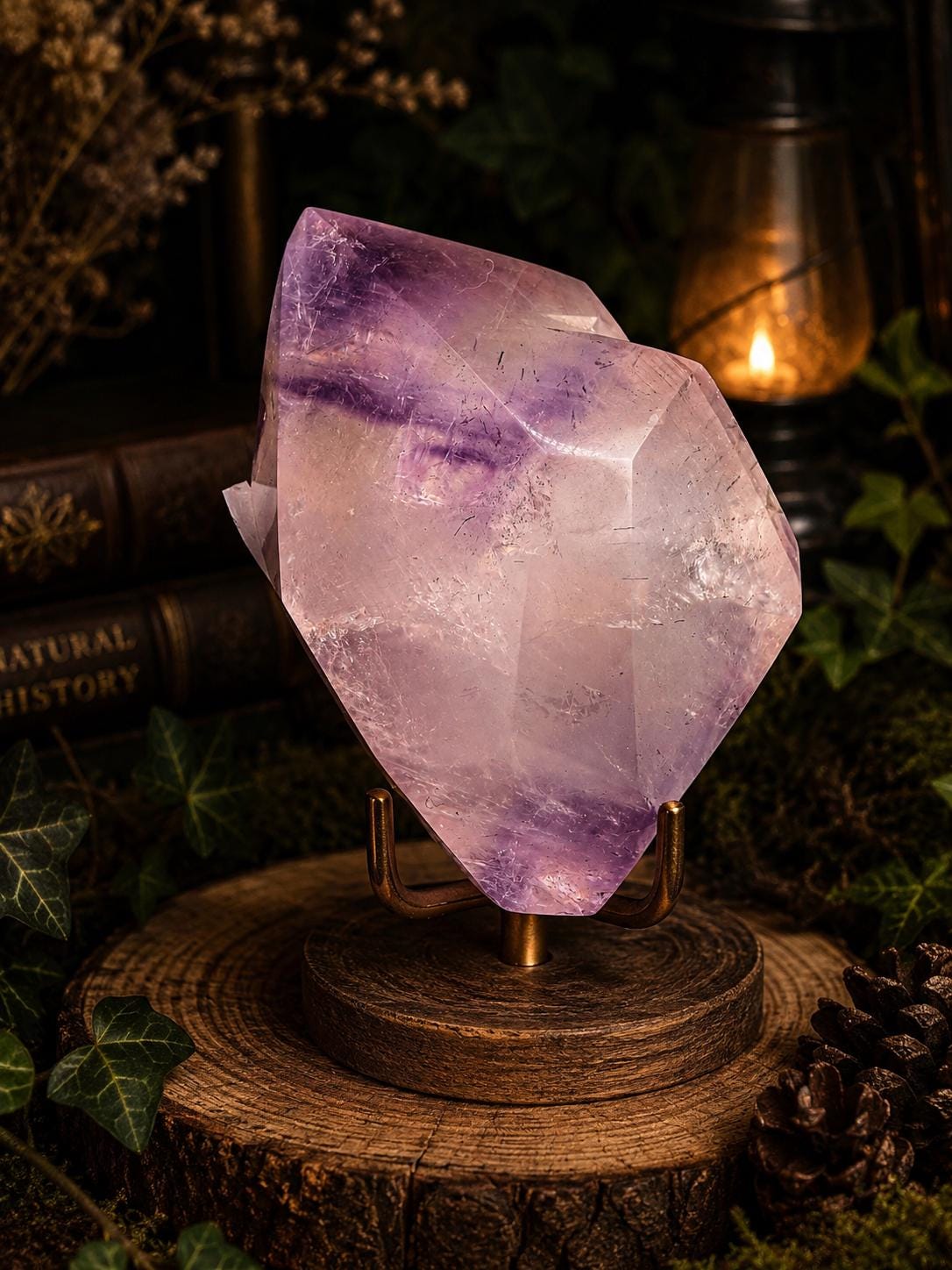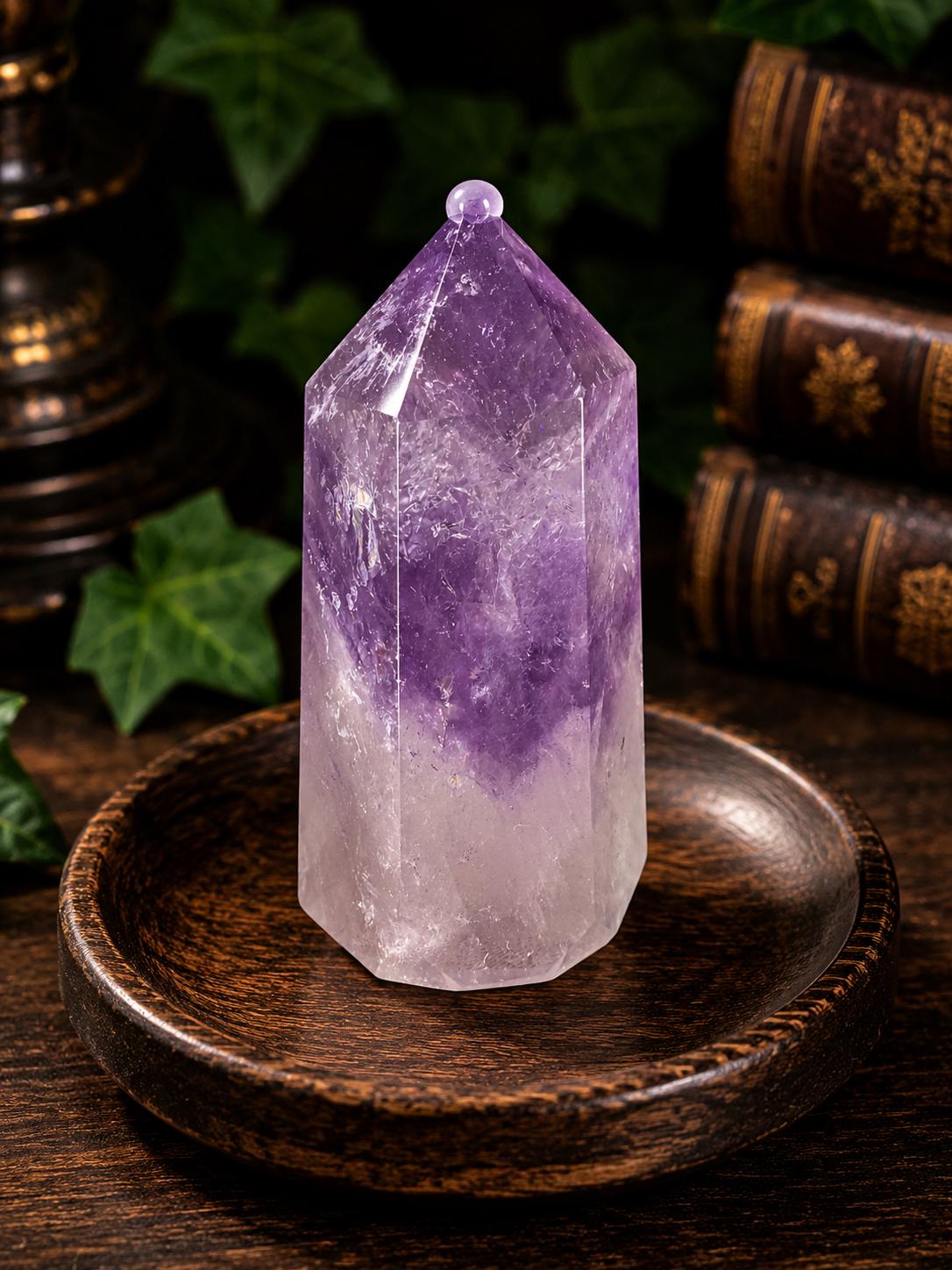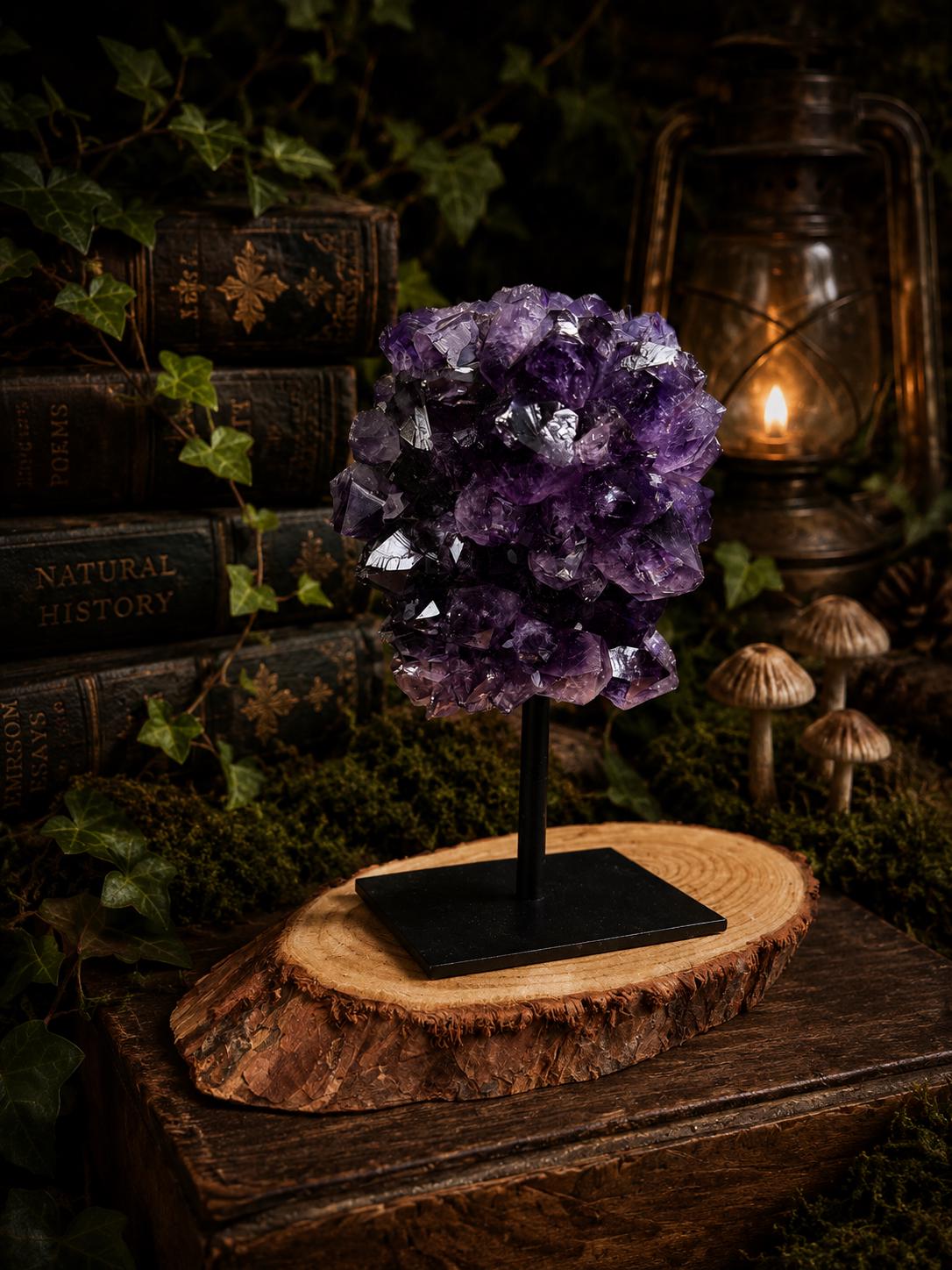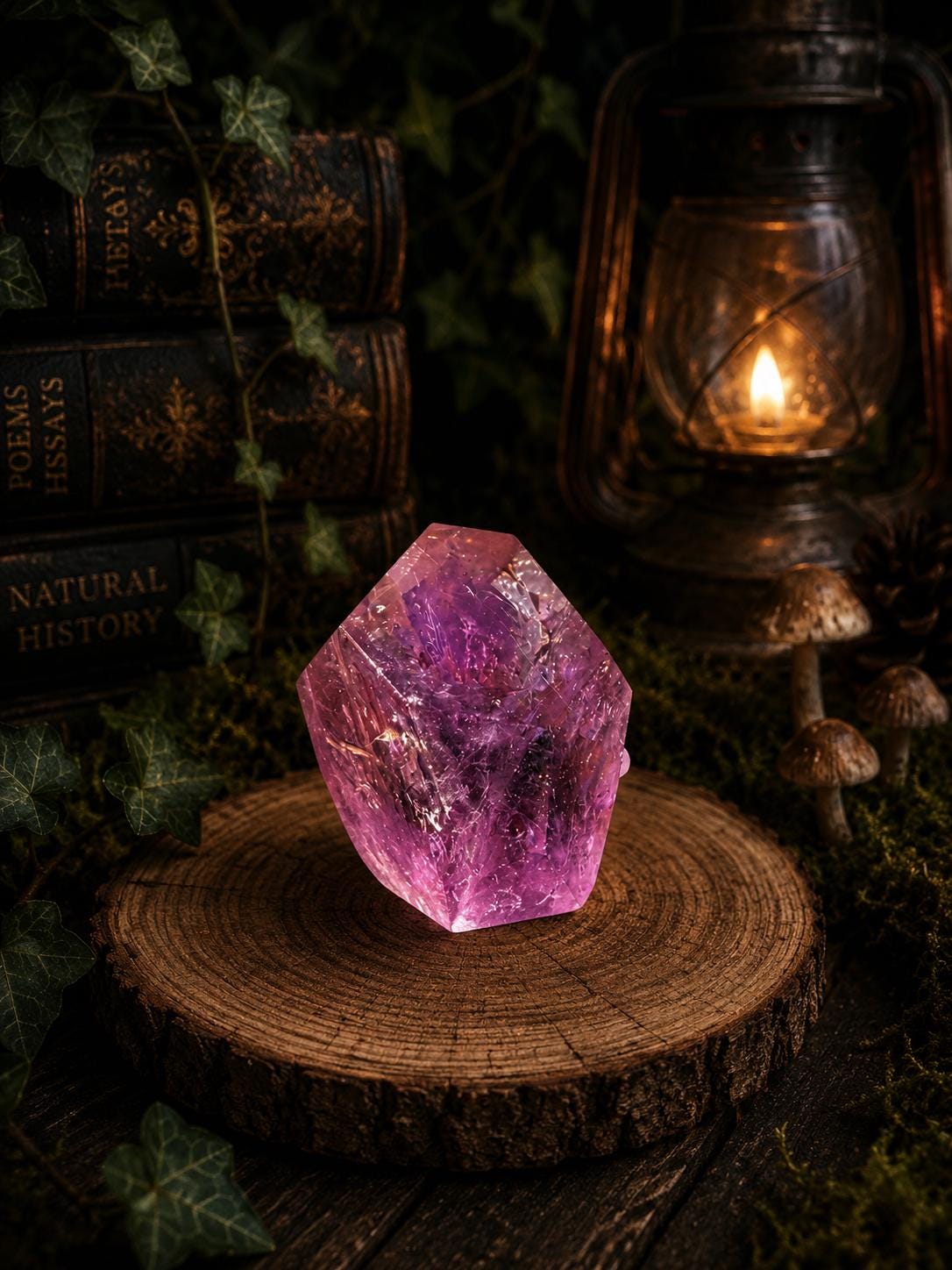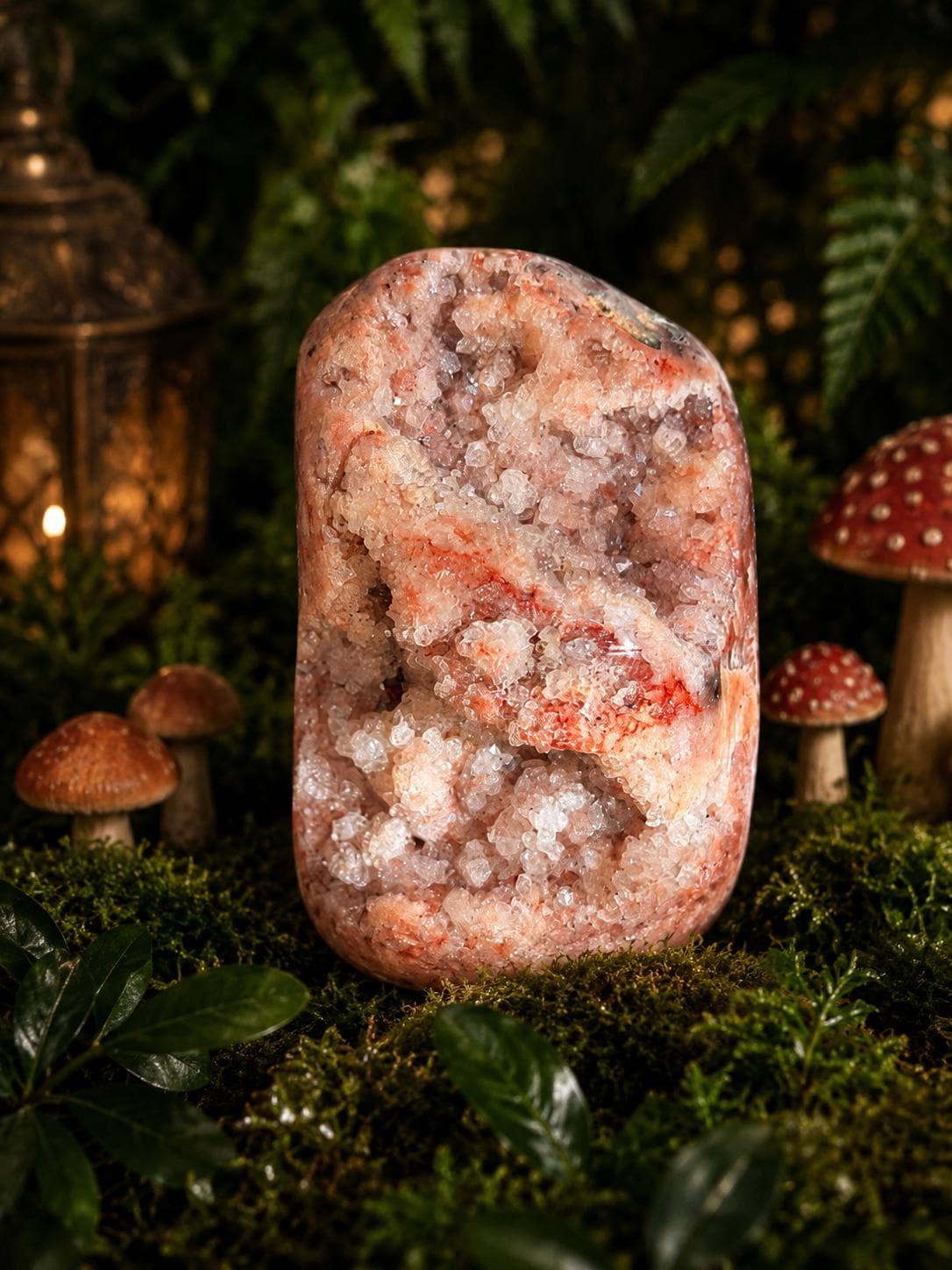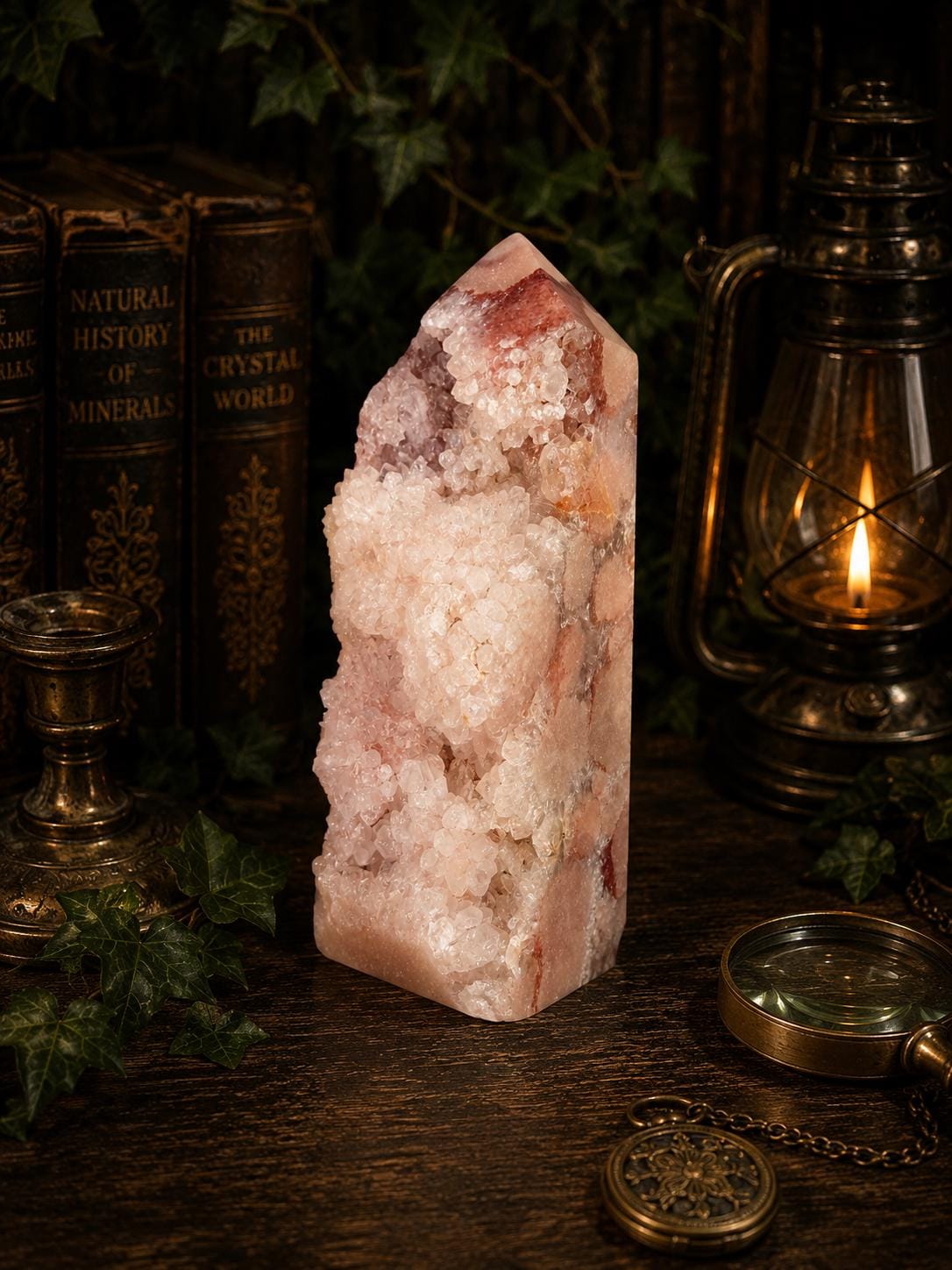
The Greeks named it amethystos — “not drunken” — and carved wine cups from it, believing it kept the mind clear no matter what the evening held. Centuries of royalty and monks agreed on one thing about this purple quartz: it belongs wherever you want a calm, clear head.
Amethyst is traditionally associated with peace, intuition, and restful sleep — it’s the stone I suggest for nightstands, meditation corners, and anyone whose thoughts get loud after dark. It matters enough here to have its own Spell Scroll, and February claims it as a birthstone.
How amethyst forms
Amethyst is clear quartz that got lucky. As the crystal grew — often lining gas bubbles in ancient lava flows — it picked up trace amounts of iron. Then the surrounding rock’s faint natural radiation went to work over geological time, nudging those iron atoms into “color centers” that swallow every wavelength except that unmistakable violet. The great cathedral geodes you see in shops grew exactly this way inside volcanic rock in southern Brazil and Uruguay, where whole basalt fields are honeycombed with hollow, purple-lined chambers.
Uruguay tends to produce the deepest, moodiest purple; Zambia adds a blue-raspberry flash; Thunder Bay in Canada grows amethyst blushed with red hematite. Same recipe, different kitchens.
A little history & folklore
The name is ancient Greek: améthystos, “not drunken.” The Greeks were convinced the stone kept a person sober, and they carved wine cups from it as insurance. Whether or not it worked, the association with a clear, unclouded mind never left.
For most of history amethyst sat beside ruby and sapphire among the precious stones — it glows in the British Crown Jewels, and medieval bishops wore amethyst rings as a symbol of spiritual clarity (it’s still called “the bishop’s stone”). Then, in the early 1800s, the enormous Brazilian deposits were discovered and amethyst quietly became the people’s gem: royal color, apprentice price. I consider that an upgrade — beautiful things should be reachable.
Working with amethyst
Traditionally amethyst is associated with calm, intuition, and rest — the stone of the quiet mind. Some of my favorite ways to invite it in:
- On the nightstand or under the pillow, the classic placement for softer sleep and remembered dreams.
- Held during meditation or a few slow breaths — its tradition is stillness, and sometimes holding something cool and purple is the fastest way there.
- Paired with rose quartz when the mind is racing about matters of the heart.
February babies: this one is yours, and you chose well.
Caring for your amethyst
☾ Water-safe for a quick rinse, but its violet fades in prolonged sunlight — this is a moonlight-cleansing stone through and through. A windowsill under a full moon is its favorite place in the house.