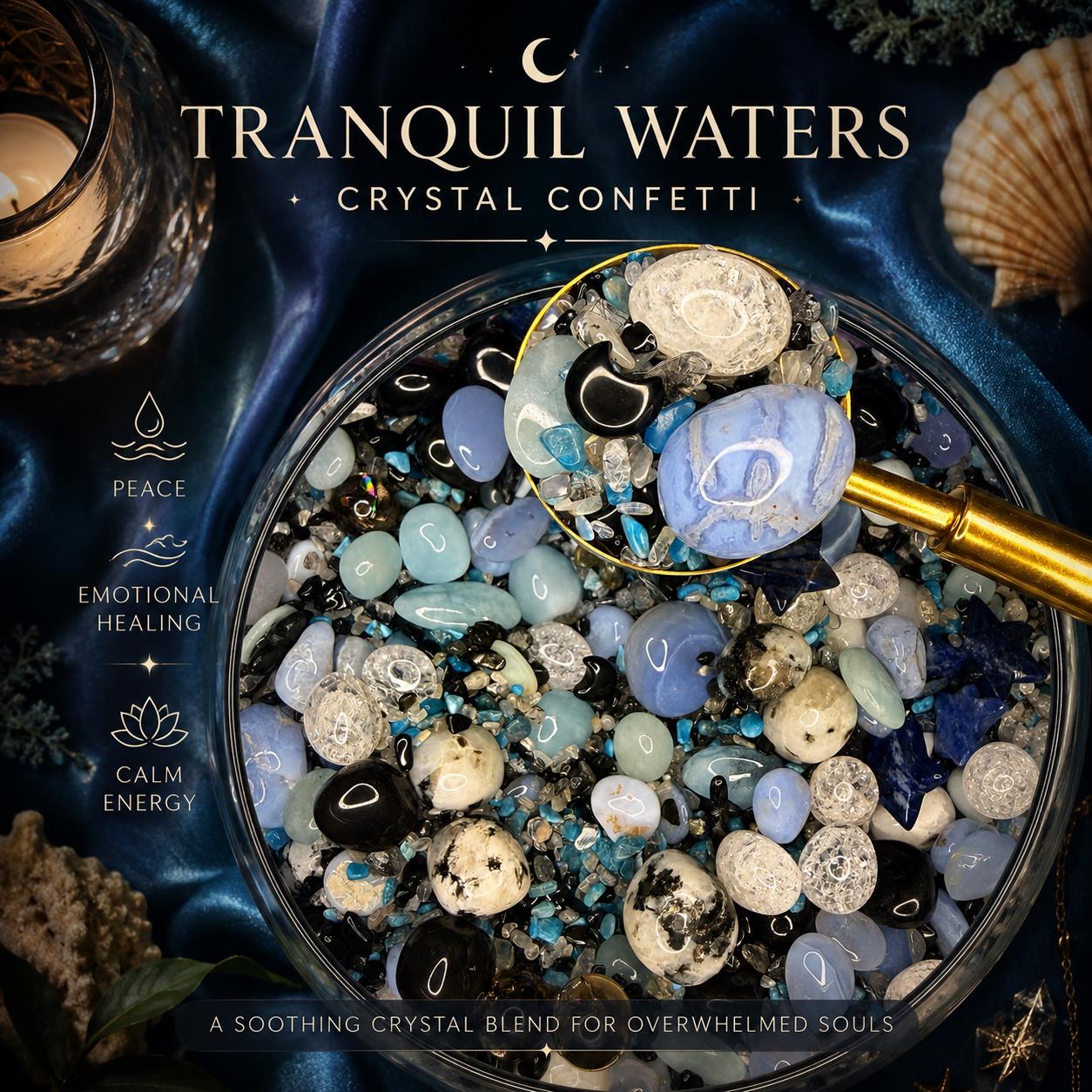
Sailors once carried aquamarine as a talisman for safe passage — its name literally means “water of the sea.” It’s a variety of beryl, cousin to emerald, with a glassy calm that seems to lower your shoulders on sight.
Traditionally it’s associated with courage that doesn’t shout — clear thinking, honest words, and moving with the current instead of against it. In Tranquil Waters, it’s the stone that keeps calm from becoming stuck.
How aquamarine forms
Aquamarine is beryl — emerald’s mineral family — grown in pegmatites, the coarse-grained igneous rocks where cooling magma’s last, mineral-rich juices crystallize slowly and extravagantly. Slow growth plus beryllium (a genuinely scarce element) plus a whisper of iron yields long six-sided crystals in every blue the sea owns, from morning-harbor pale to deep-water teal. Because pegmatite pockets give crystals room, aquamarine can grow enormous and glass-clear — Brazil once produced a transparent crystal over 100 kilograms, the size of a small child and clearer than most windows.
Minas Gerais in Brazil is the storied source; Pakistan’s high-mountain pockets, Nigeria, and Madagascar add their own blues.
A little history & folklore
The name is Latin, aqua marina — sea water — and no gem has ever been named more honestly. Roman sailors carried aquamarine engraved with Neptune as a talisman for safe passage, believing it calmed waves and captains alike; legend held it was truest treasure of mermaids’ chests. Medieval tradition considered it an antidote to poison and a stone of reconciliation between lovers — and for centuries it’s been the March birthstone, the sea handing spring its first clear day.
The throughline of all that folklore is courage without drama: not the courage of battle-stones like tiger’s eye, but the sailor’s kind — steady hands, clear eyes, and speaking plainly over the wind.
Working with aquamarine
Traditionally aquamarine is associated with calm courage, honest words, and flow — it keeps my Tranquil Waters blend from ever going stagnant. How I use it:
- Before speaking when the stakes are high — it’s the classic stone for saying the true thing in a level voice.
- On travel, literal or otherwise: new jobs, new cities, new chapters. Safe passage covers a lot of territory.
- Paired with blue lace agate for the gentlest possible communication toolkit, or obsidian — calm water, meet firm boundary.
March babies, the sea saved you the best of its color.
Caring for your aquamarine
☾ Water-safe (fittingly). Avoid long stretches of direct sun, which can soften its color over the years.