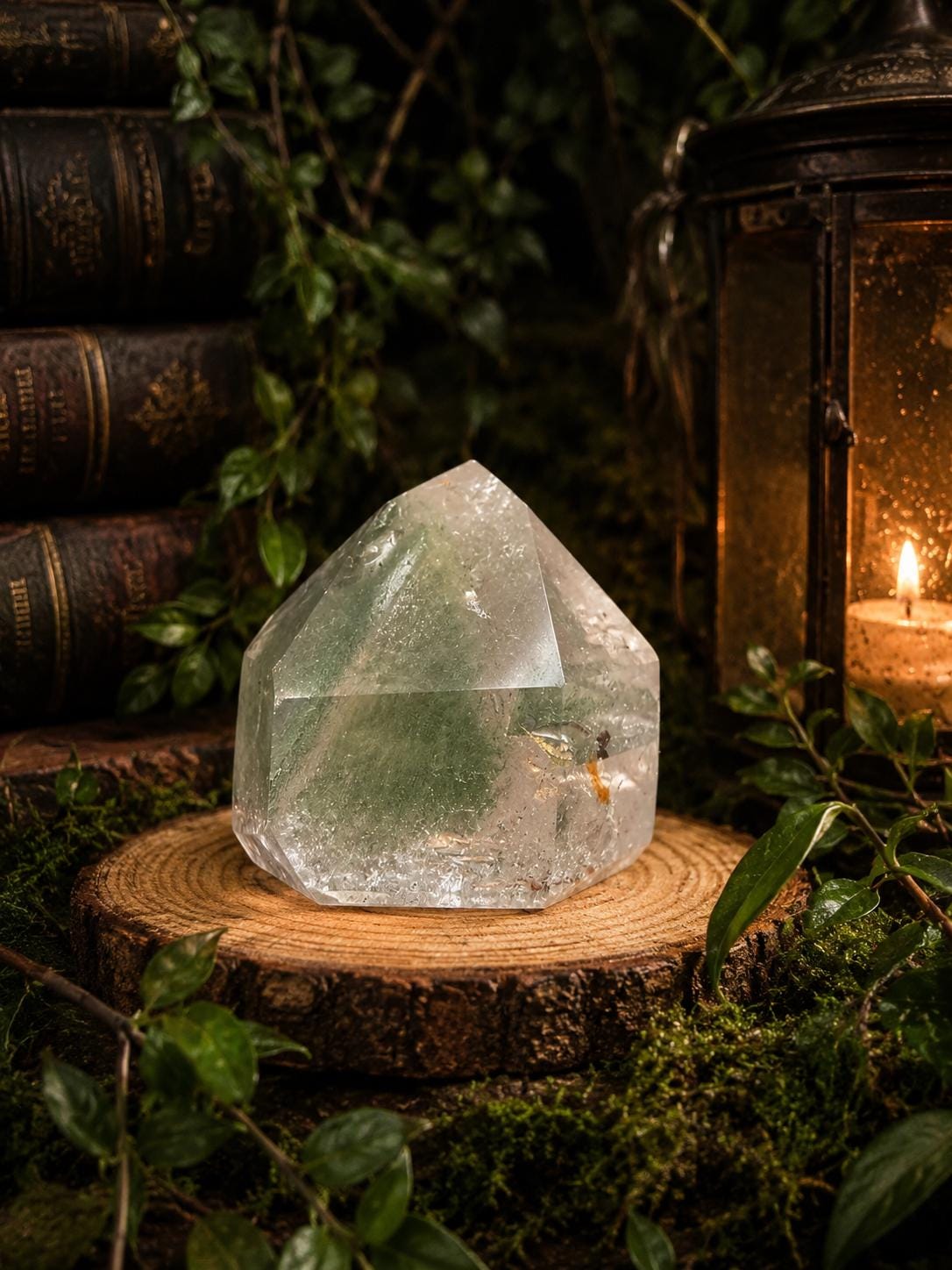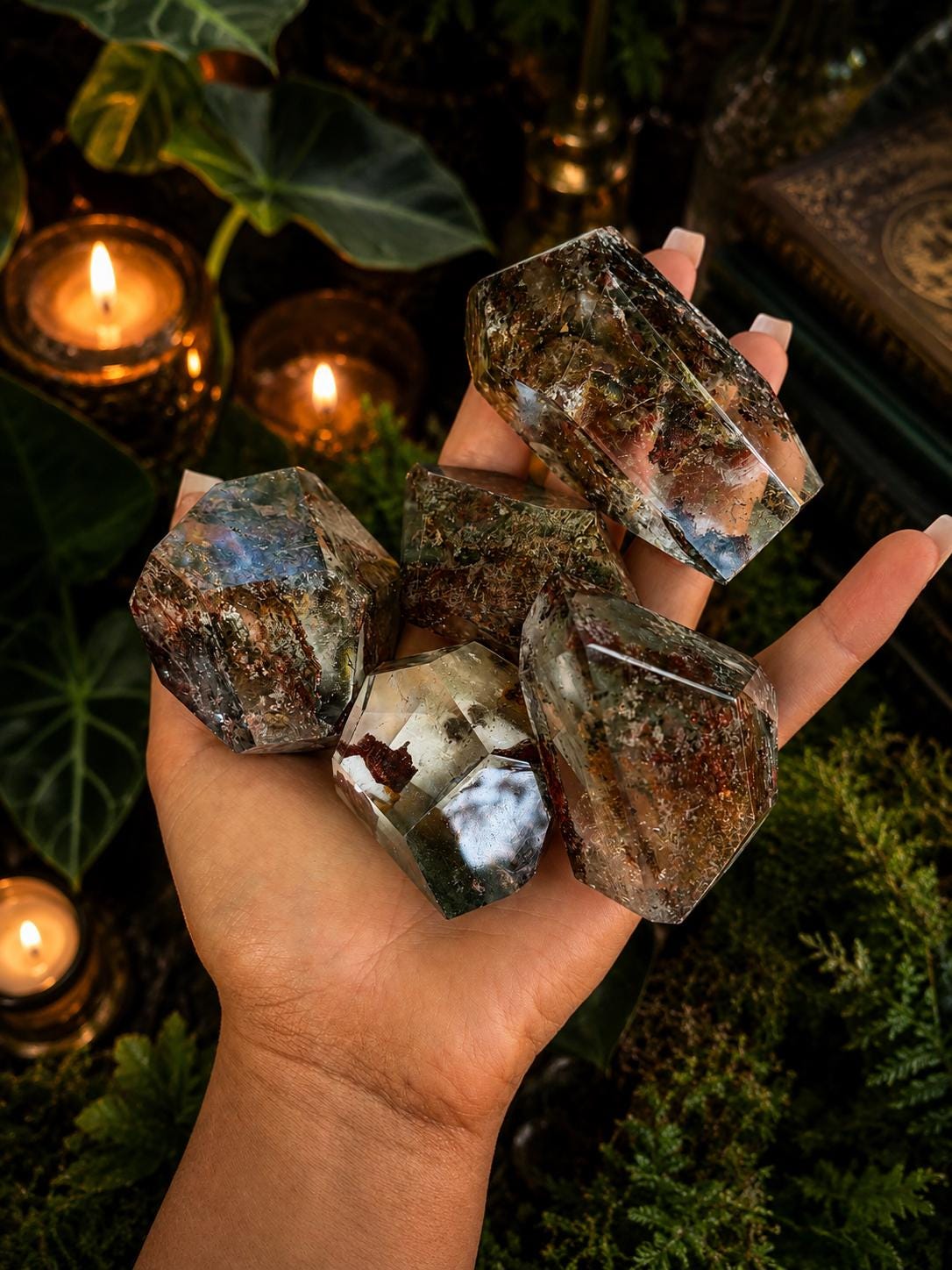
Garden quartz (also known as lodolite) forms when quartz grows slowly in mineral-rich environments, trapping inclusions like chlorite, iron, and feldspar inside as it develops. These inclusions can create layered scenes that resemble moss, forests, or underwater landscapes — but they are actually mineral deposits, not plant material: tiny gardens millions of years old.
Most garden quartz comes from Brazil, where specific geological conditions allow these inclusions to form undisturbed within clear quartz. Because the quartz must grow slowly enough to remain clear while capturing intact inclusions, high-quality pieces with detailed, scenic formations are uncommon and highly valued.
Often associated with grounding and transformation, garden quartz is believed to support personal growth by helping you reflect, release, and reconnect with the natural rhythms of change.
How garden quartz forms
Garden quartz is a terrarium the earth planted for itself. As a quartz crystal grew — slowly, in the mineral-rich pockets of Minas Gerais, Brazil — it engulfed whatever its neighbors left lying around: mossy green chlorite, cream-colored feldspar, rusty veils of iron. Because quartz grows clear when it grows slowly, the crystal sealed those minerals inside like a snow globe, and kept growing glass-clear around them.
The result is a landscape you can hold: reefs, forests, riverbanks, underwater gardens — every piece a different world, and no two remotely alike. Lapidaries usually cut garden quartz into spheres and freeforms specifically to turn that inner scenery into something you can wander with your eyes.
A little history & folklore
The trade name lodolite likely borrows from lodo, Portuguese for mud — Brazilian miners’ affectionately literal name for quartz with sediment caught inside. Somewhere between the mines and the shops it earned better titles: scenic quartz, landscape quartz, the shaman’s dream stone.
Modern tradition has taken to using garden quartz for journeying and reflection — gazing into the inclusions the way crystal-gazers have always used quartz spheres, except this sphere brings its own scenery. It’s honestly the most beginner-friendly stone for contemplative gazing: your eye has somewhere to go.
Working with garden quartz
Traditionally garden quartz is associated with grounding, transformation, and gentle self-reflection — a stone that shows you a little world and quietly asks about yours. Ways I love to use it:
- Candlelight gazing: hold the piece up to a flame and slowly turn it, letting the landscape shift. Ten quiet minutes will find you.
- On the desk as a reminder that growth is layered — every stratum in there was once the surface.
- Paired with moss agate for full inner-forest energy, or clear quartz to keep the window clean, so to speak.
Mine ship with their own Garden Quartz spell scroll — a little map for a little world.
Caring for your garden quartz
☾ Tough as any quartz and safe for a quick rinse. Cleanse it under moonlight, then hold it up to candlelight and let the little landscape inside do the rest.