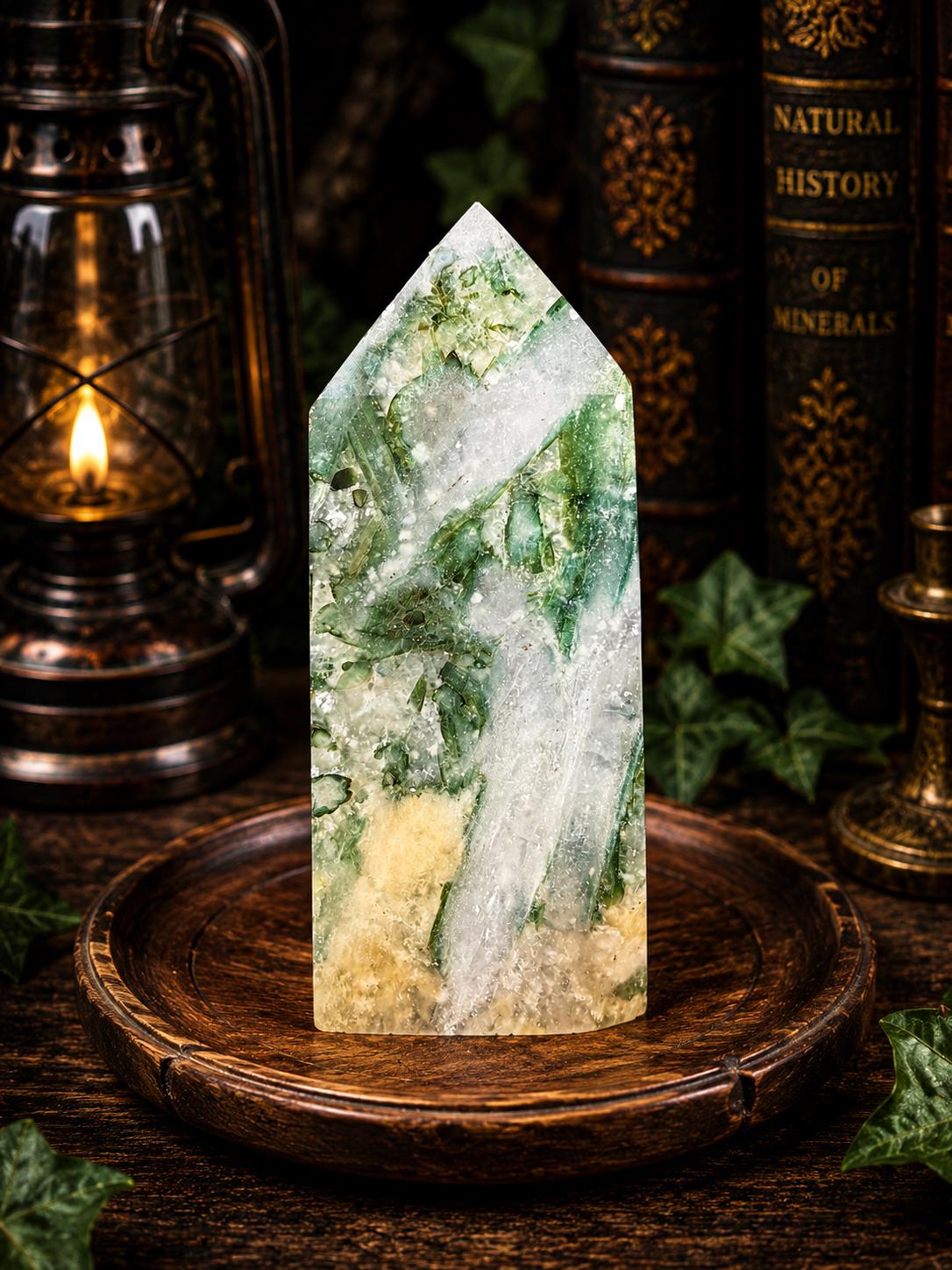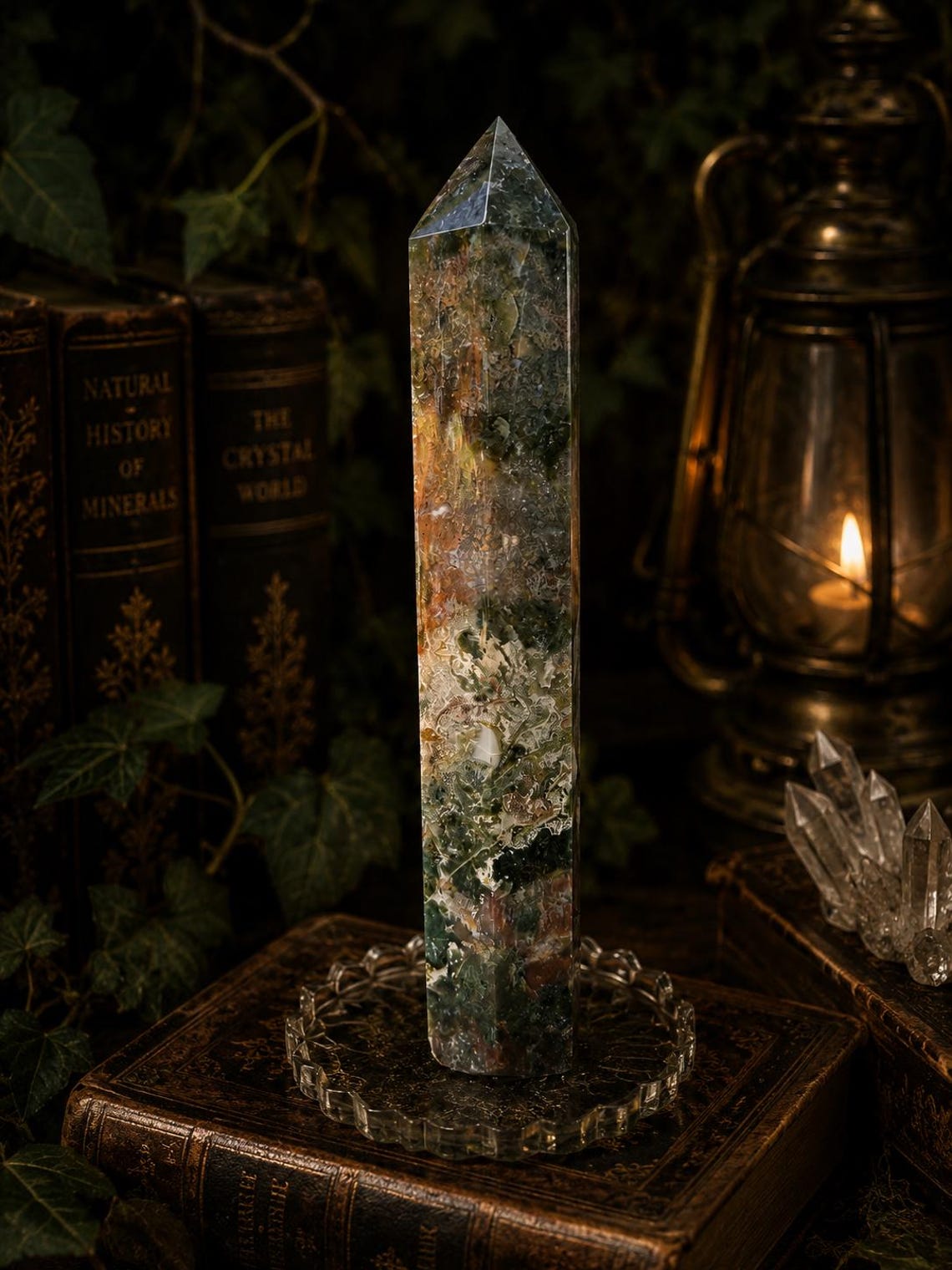
If the forest floor could be poured into a stone, it would look like moss agate. Those green, plant-like tendrils aren’t actually moss — they’re mineral inclusions — but ancient gardeners didn’t know that, and honestly, I love them for it. This has been the stone of growers, healers of gardens, and slow, patient beginnings for centuries.
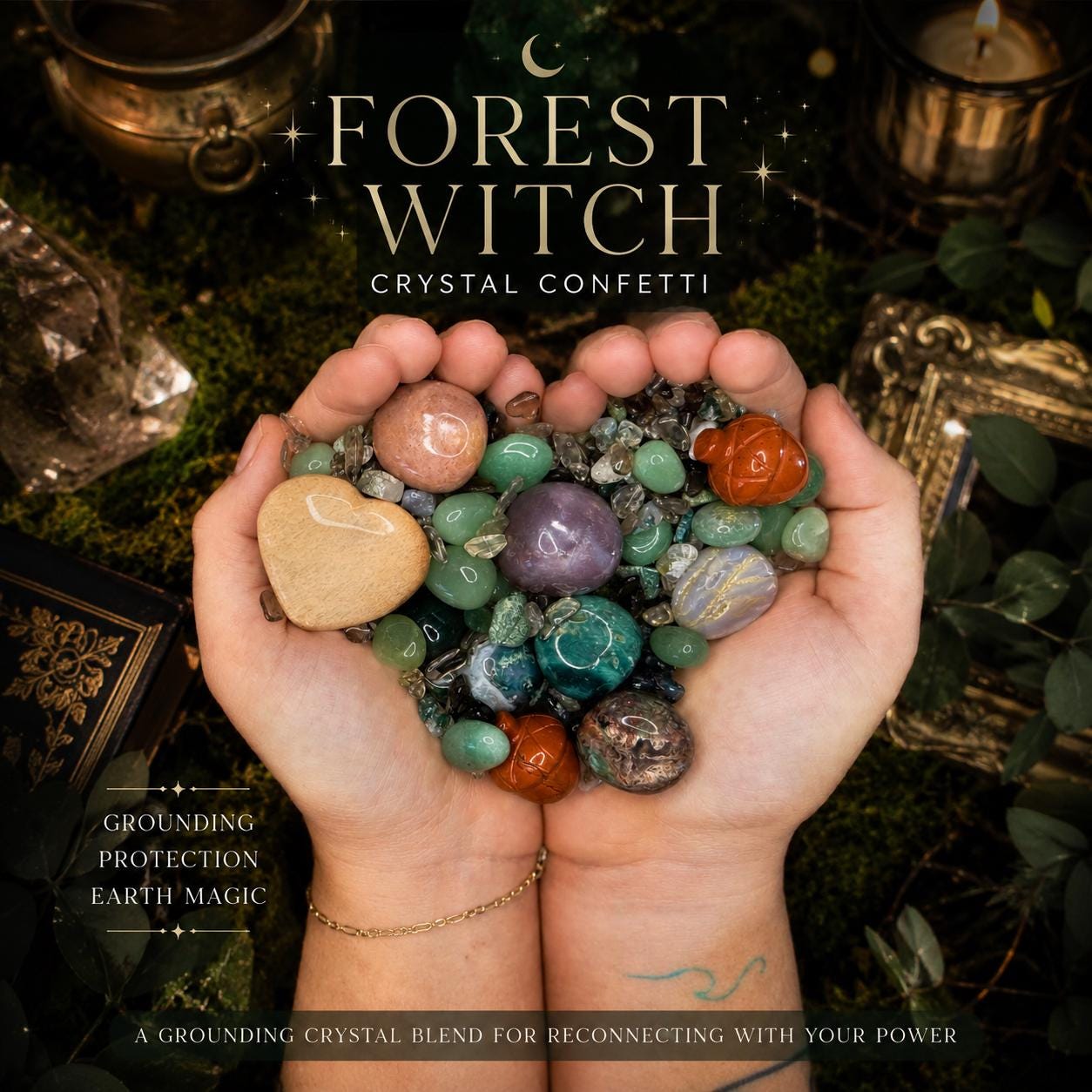
I reach for moss agate whenever something in my life needs tending rather than forcing — a new habit, a new project, a season of change. It’s traditionally associated with grounding, abundance, and reconnecting with the earth, which is why it anchors my Forest Witch blend.
How moss agate forms
Moss agate is chalcedony — quartz in its microcrystalline form, built of crystals too small to see — that grew around a garden. As silica-rich water filled cavities in weathered volcanic rock, minerals like green chlorite and hornblende crystallized first, branching through the space in fern-and-moss patterns called dendrites. The chalcedony then sealed the whole scene in translucent stone, a meadow pressed under glass.
Because those green threads formed exactly the way frost ferns form on a winter window — crystals following the mathematics of branching — every piece really is a one-off landscape. India produces most of the world’s supply, with beautiful material from Brazil, Uruguay, and Montana too.
A little history & folklore
Moss agate has been the countryside’s stone for a very long time. Eighteenth-century British and European farmers hung moss agate from trees and ox horns to coax a good harvest, and gardeners tucked it into beds when planting — the reasoning being that a stone with a garden inside must be sympathetic to gardens outside. Ancient sources loved agates generally (the Greek naturalist Theophrastus named them after Sicily’s Achates river, where they were first collected), and moss agate inherited that lineage with leaves on.
I keep the tradition alive on purpose: there’s a piece of moss agate in my own planter of herbs, and I genuinely couldn’t tell you if it helps the basil — but it helps me remember to water it, and that amounts to the same thing.
Working with moss agate
Traditionally moss agate is associated with grounding, steady growth, and beginnings that need tending rather than forcing. It anchors my Forest Witch blend for exactly that reason. How I use it:
- With anything you’re growing — literal plants, new habits, slow projects. It’s the patron stone of “day by day.”
- In the pocket during seasons of change, as a reminder that roots grow before leaves show.
- Paired with smoky quartz and green aventurine, its Forest Witch companions — grounding, growth, and a little luck.
If you’ve killed every houseplant you’ve owned, start here. The stone survives anything, and its garden is already grown.
Caring for your moss agate
☾ Sturdy and easygoing. Safe to rinse in water, happy in sunlight or moonlight. Cleanse it by burying it in soil overnight if you want to be extra witchy about it.