The gardener’s stone — quiet growth, deep roots
Earth · Heart chakra · Virgo, Taurus · Grounding · Growth · New beginnings
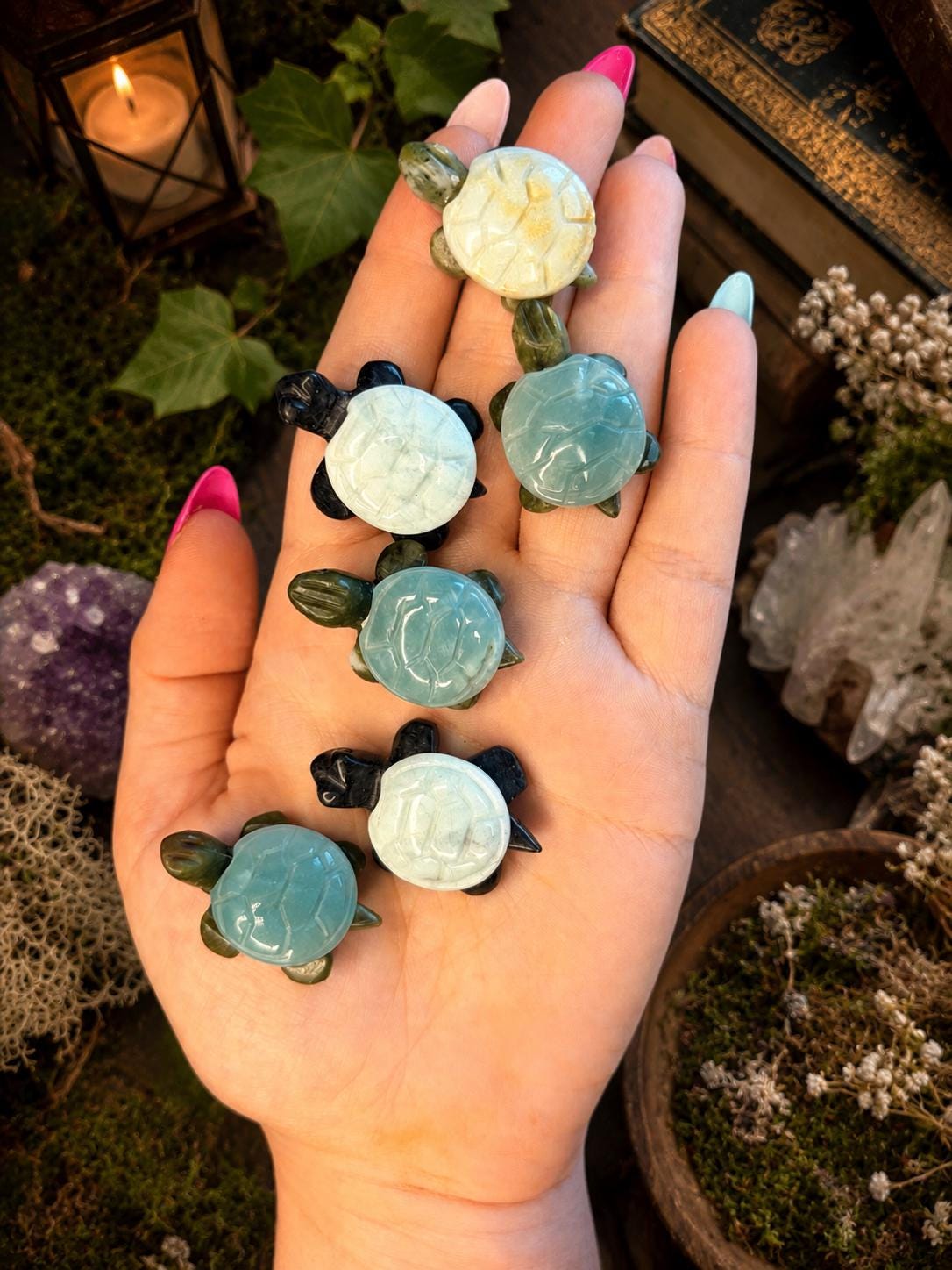
If the forest floor could be poured into a stone, it would look like moss agate. Those green, plant-like tendrils aren’t actually moss — they’re mineral inclusions — but ancient gardeners didn’t know that, and honestly, I love them for it. This has been the stone of growers, healers of gardens, and slow, patient beginnings for centuries.
Read the full Moss Agate entry in the Crystal Library →The soft glow that cleans a room’s energy
Varies by color · Varies by color chakra · Cancer · Amplifying · Cleansing · Softness
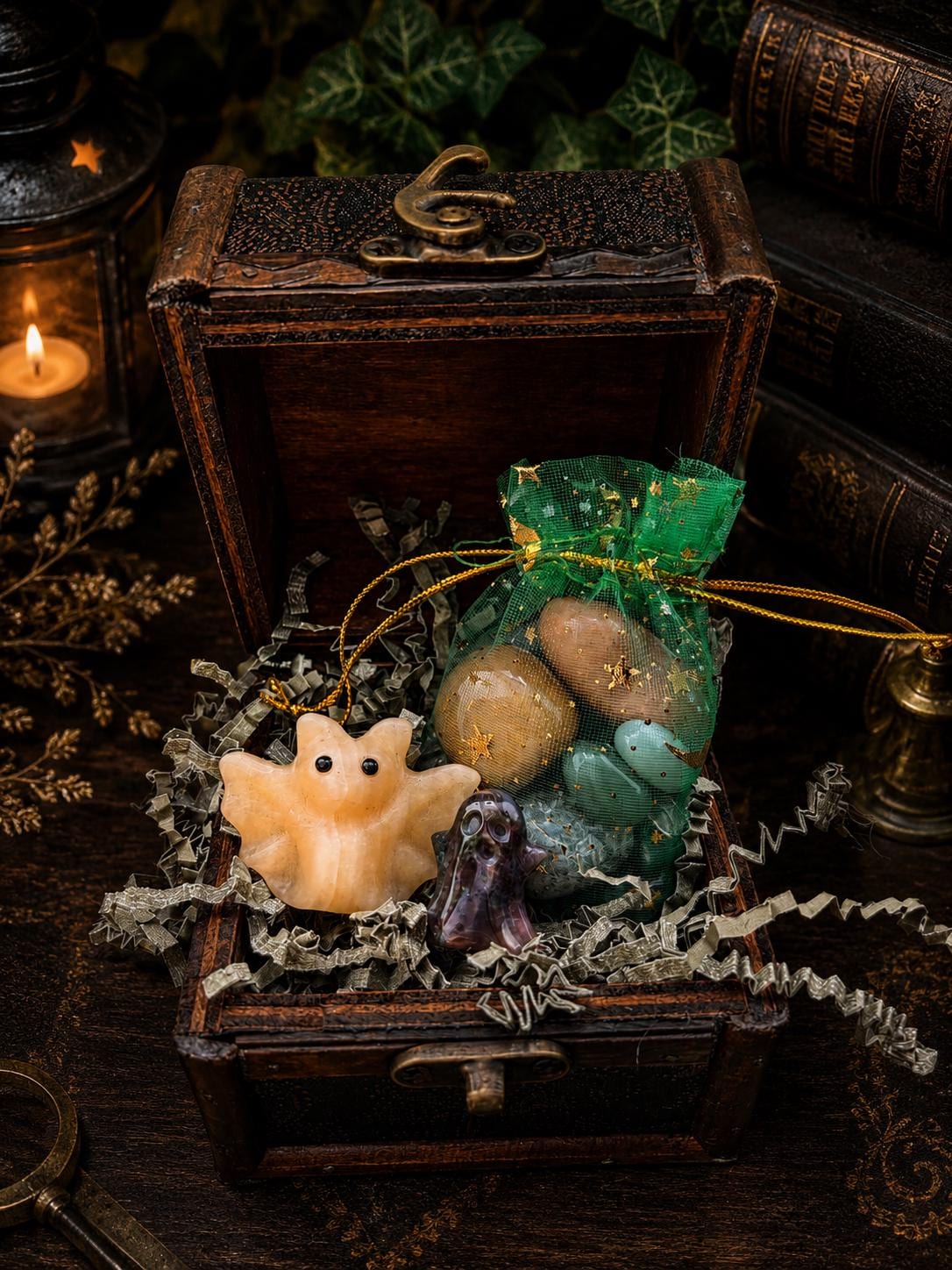
Calcite comes in nearly every color the earth can mix — honey, peach, sea-green, snow — and all of them share that soft, waxy glow, like light through a lantern. It’s one of the most abundant minerals on the planet, and I love that about it: magic doesn’t have to be rare.
Read the full Calcite entry in the Crystal Library →Joy in orbicular form
Water · Heart · Solar Plexus chakra · Cancer, Pisces · Joy · Renewal · Gentleness
True ocean jasper comes from one remote stretch of Madagascar’s coast, harvestable only at low tide — which feels right for a stone covered in tiny circles like tide pools and bubbles. No two pieces are remotely alike.
Read the full Ocean Jasper entry in the Crystal Library →The stone that taught us to make fire
Earth · Fire · Solar Plexus chakra · Leo · Abundance · Confidence · Protection
Pyrite’s name comes from the Greek pyr — fire — because striking it against steel throws real sparks, and people literally used it to light fires for thousands of years. Everyone calls it “fool’s gold,” but I think the fools were the ones who tossed it aside: pyrite grows in perfect, naturally striated cubes straight out of the earth, no polishing required, which still feels like a small miracle to me.
Read the full Pyrite entry in the Crystal Library →An ember that’s been glowing since the Bronze Age
Fire · Earth · Root chakra · Capricorn, Aquarius · Vitality · Passion · Courage
Garnet takes its name from the Latin granatum — pomegranate — because a rough red garnet looks exactly like one of those glistening seeds. People have loved it for a very long time: garnet beads have been found in Bronze Age graves, ancient Egyptian jewelry, and the red-inlaid gold of Anglo-Saxon kings. Travelers carried it for protection on long roads, and it’s been January’s birthstone for centuries.
Read the full Garnet entry in the Crystal Library →