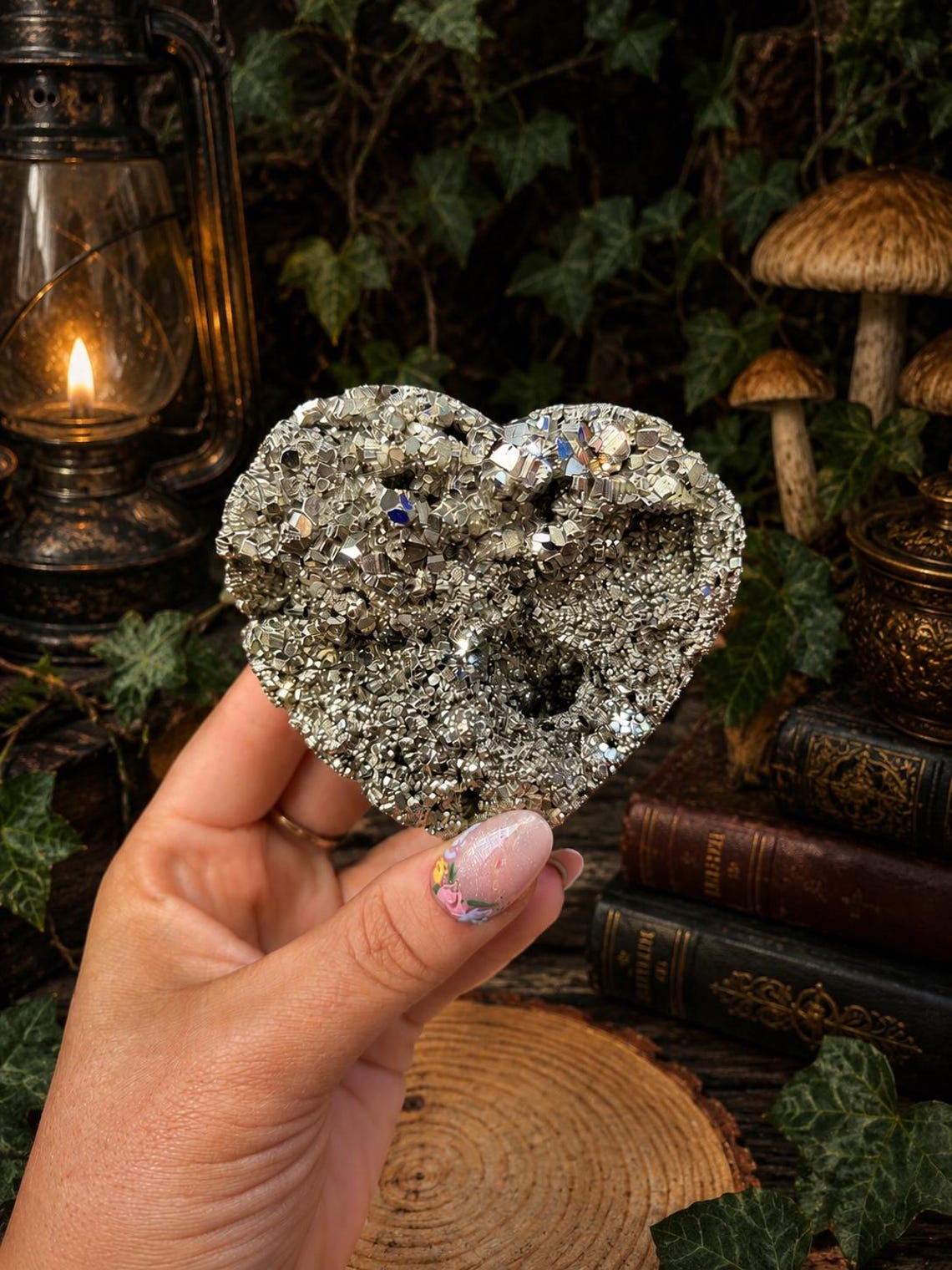
Pyrite’s name comes from the Greek pyr — fire — because striking it against steel throws real sparks, and people literally used it to light fires for thousands of years. Everyone calls it “fool’s gold,” but I think the fools were the ones who tossed it aside: pyrite grows in perfect, naturally striated cubes straight out of the earth, no polishing required, which still feels like a small miracle to me.
Traditionally it’s associated with abundance, willpower, and a bright, shielding confidence — the stone you keep on a desk where big decisions get made. Mine sits exactly there.
How pyrite forms
Pyrite is the earth’s most committed impersonator — iron and sulfur arranged in a cubic lattice that gleams like the precious metal it isn’t. It forms nearly everywhere geology allows: crystallizing in hydrothermal veins, scattered through slates, and — my favorite — replacing the shells of ancient sea creatures atom by atom, leaving behind ammonites turned to fool’s gold. In Navajún, Spain, it grows as perfect, mirror-faced cubes embedded in soft gray rock, specimens so geometric that museums display them with “yes, this is natural” signage, because nobody believes it.
Look closely at a cube’s face and you’ll usually find fine parallel lines — striations — pyrite’s signature, and one of the easy ways to tell it from actual gold (that, and gold weighs nearly four times as much).
A little history & folklore
Before pyrite was “fool’s gold,” it was genius fire. The name comes from Greek pyr — fire — because striking pyrite against steel or flint throws hot sparks, and humans from the Stone Age through the age of wheellock pistols used it as exactly that: a portable fire-starter. Fool’s gold lit real fires for millennia. The Inca polished great slabs of it into mirrors; Victorian jewelers cut and faceted it (confusingly labeled “marcasite”) into the glittering mourning jewelry of the era.
The mockery in its nickname never stuck to the stone’s actual folklore, which is all fire and finance: modern tradition holds pyrite as a stone of abundance, vitality, and confident protection — wealth energy with a spark literally built in.
Working with pyrite
Traditionally pyrite is associated with abundance, willpower, and a bright defensive shine — think of it as the extroverted cousin of black tourmaline. How I use it:
- On the desk, beside the laptop, in the studio — anywhere work is trying to become prosperity. This is the classic placement, the modern merchant’s till.
- Held before bold asks: pitches, prices, negotiations. Tradition says pyrite lends nerve; the metallic heft in your palm makes a persuasive argument.
- Paired with citrine for the full prosperity altar, or garnet when ambition needs stamina behind it.
My pyrite hearts and specimens ship with their own Pyrite spell scroll. Keep it dry, keep it close to your work, and let it remind you: even the earth enjoys dressing up as treasure — and sometimes the disguise is the treasure.
Caring for your pyrite
☾ Keep this one DRY — pyrite is an iron sulfide, and long exposure to water or humidity can dull and eventually degrade it. Cleanse with sound, smoke, or moonlight through a window; never a water bath.