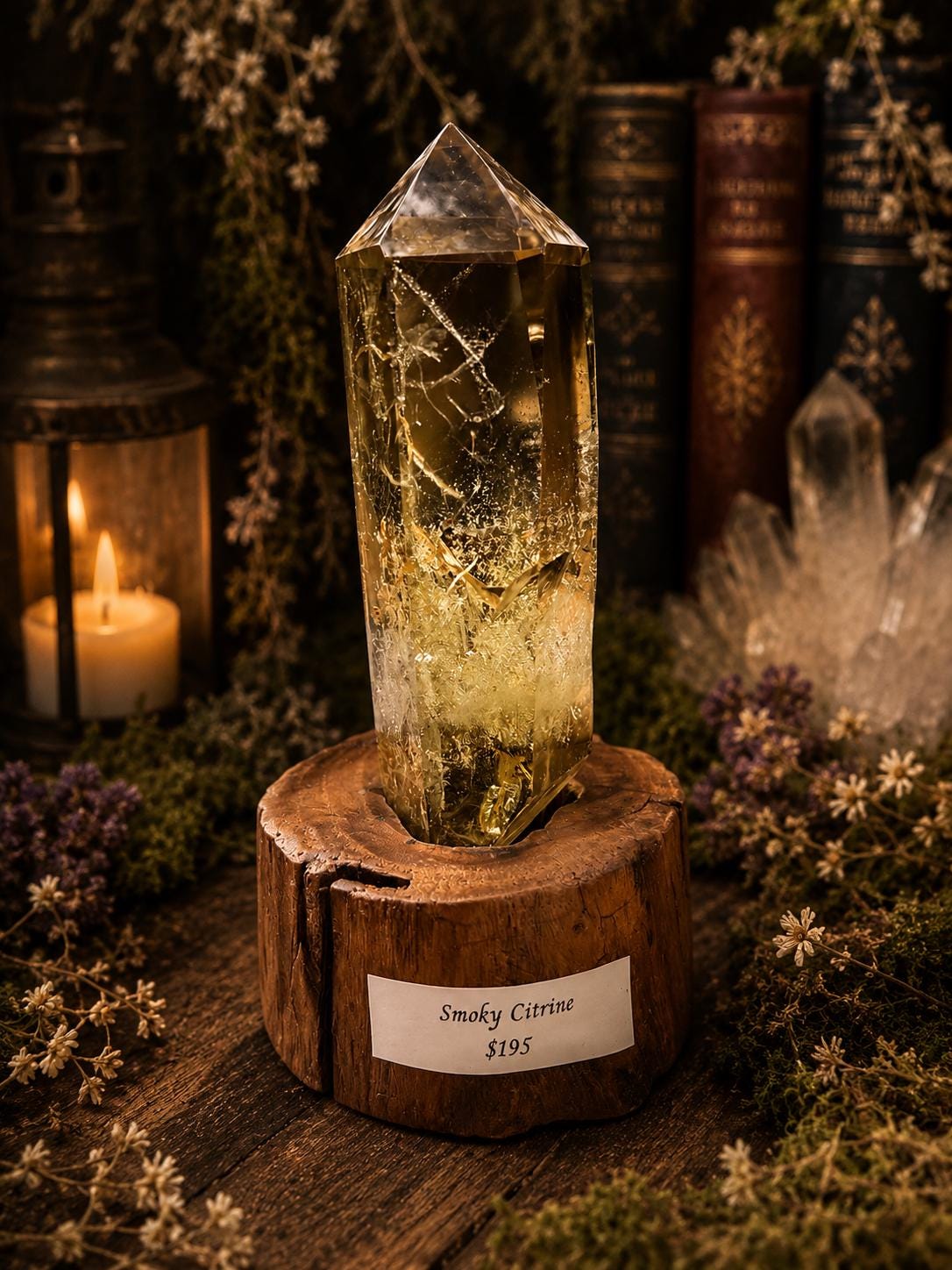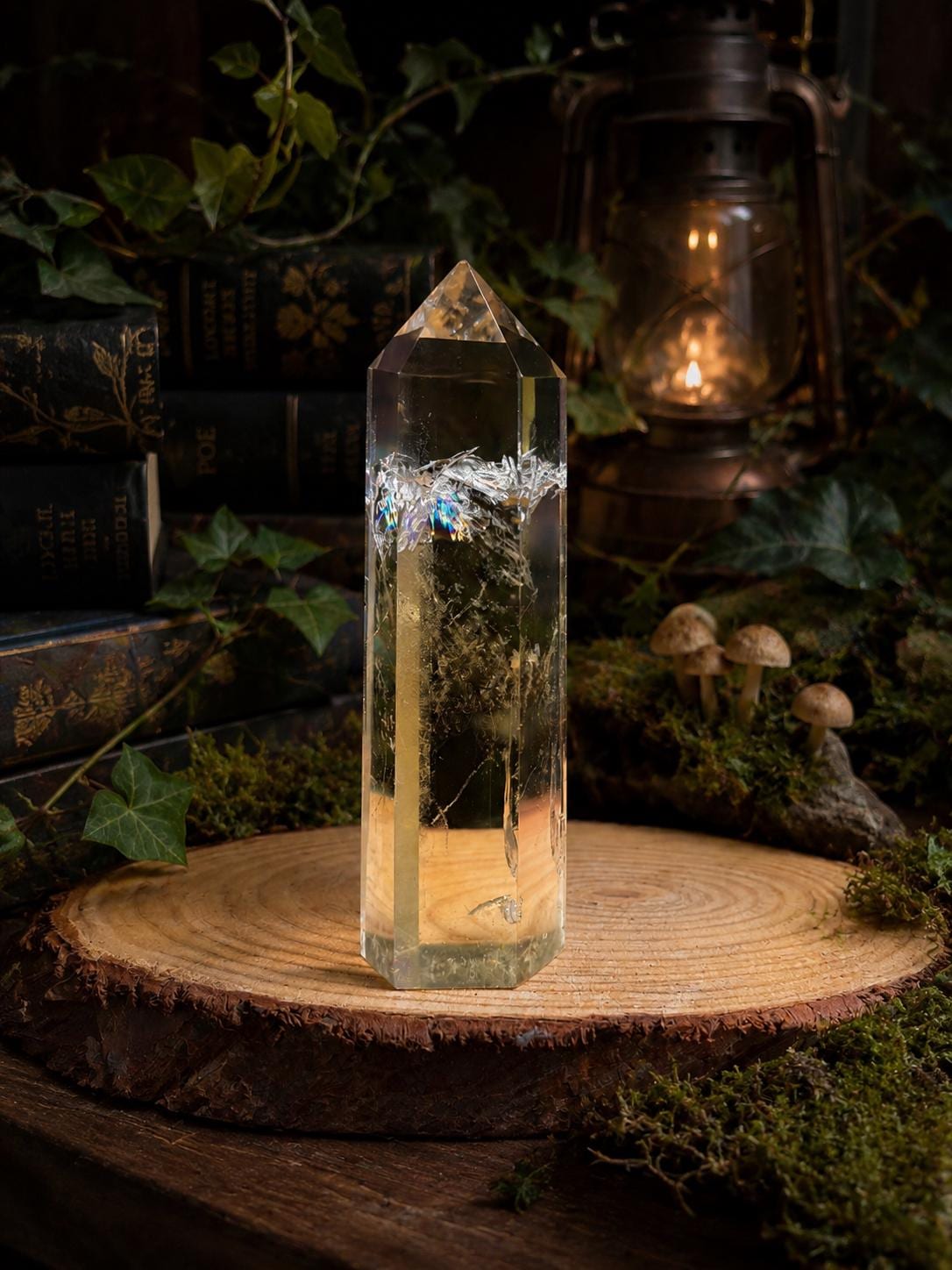
Citrine is quartz kissed with gold — merchants once tucked it into cash boxes and called it the “Merchant’s Stone,” convinced it drew prosperity. Whether or not it fattens the till, it’s very hard to hold citrine and stay gloomy.
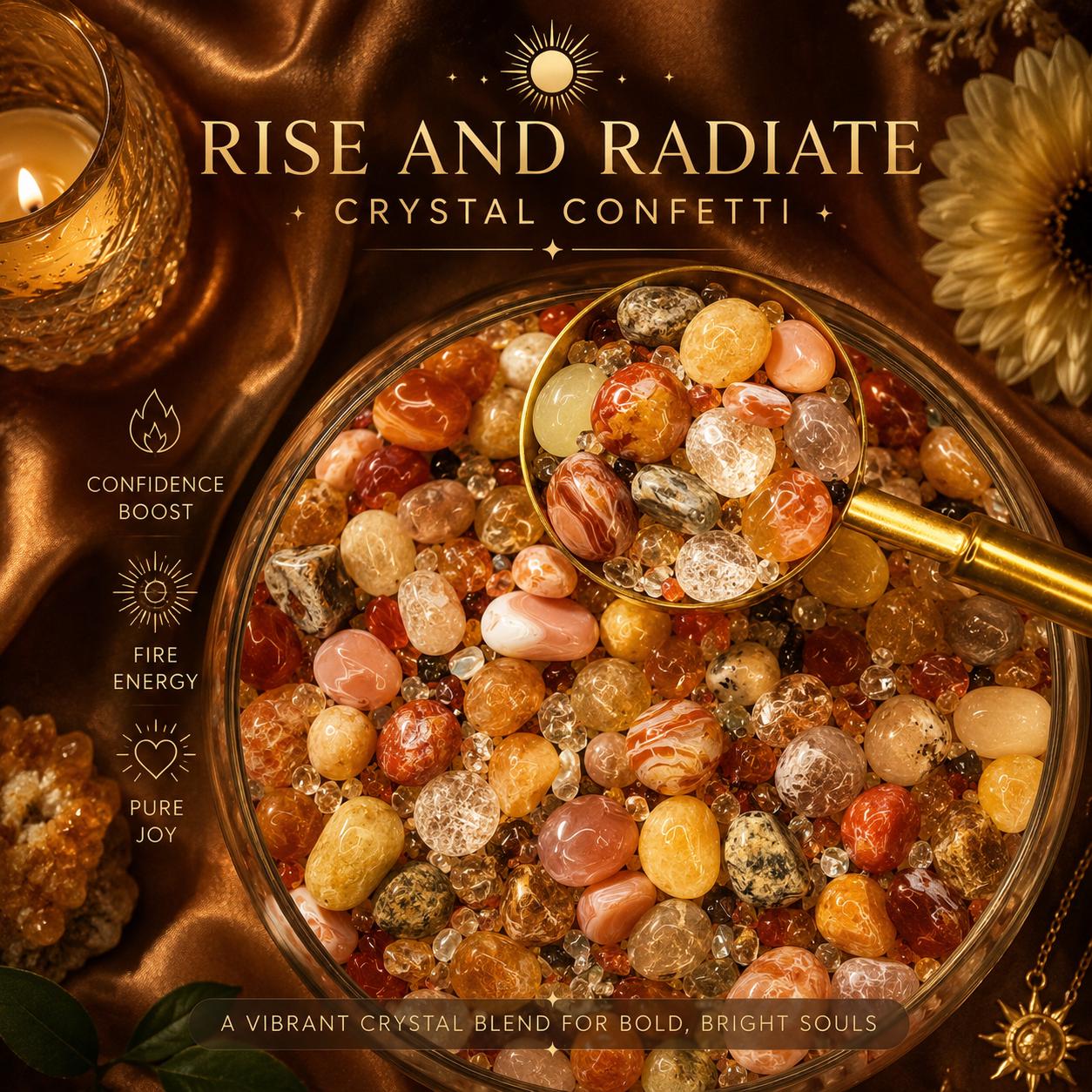
It’s traditionally associated with abundance, confidence, and warm, generous energy — the sun stone of my Rise & Radiate blend. I keep one on my work desk where the afternoon slump usually finds me.
How citrine forms
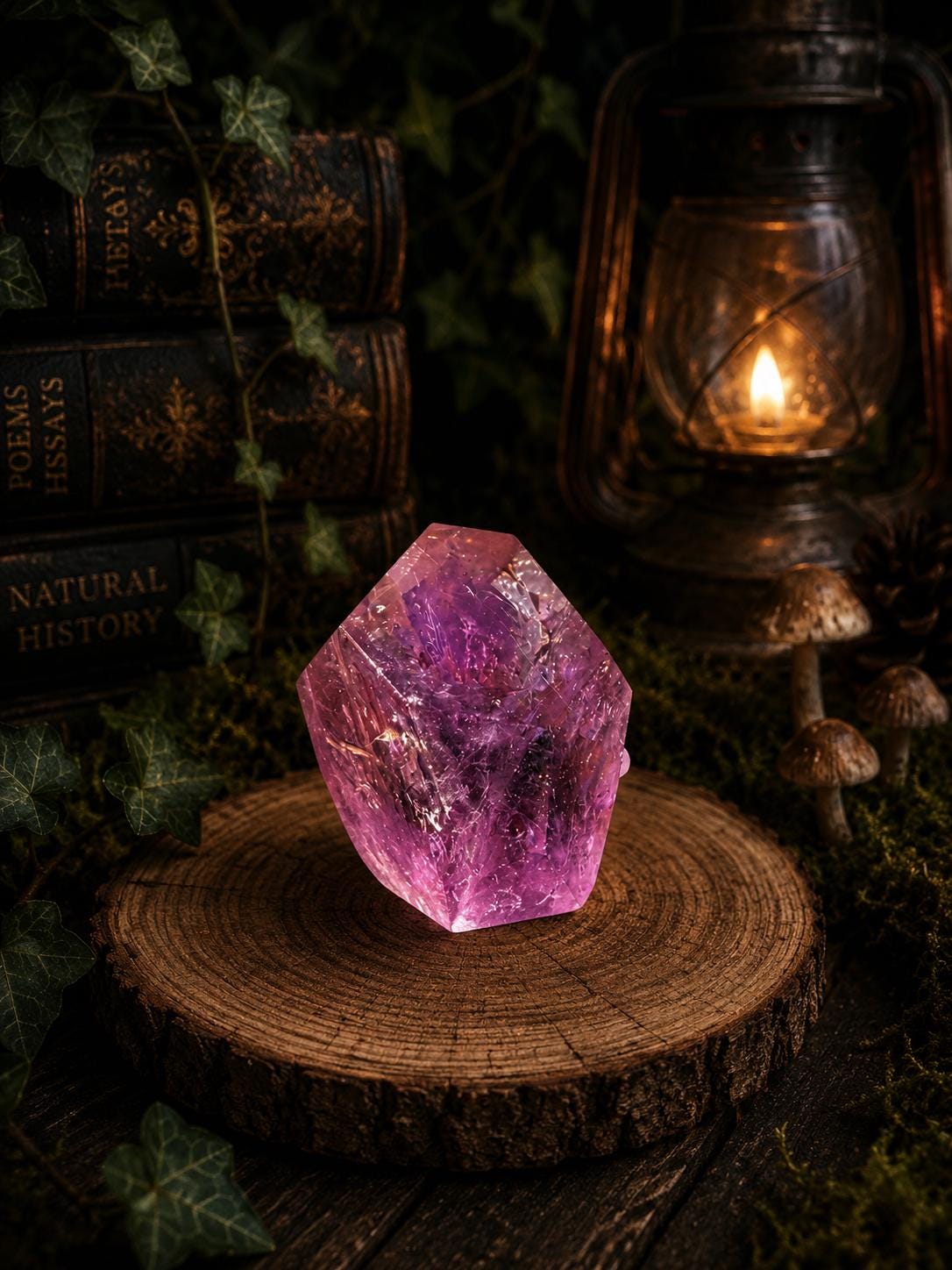
Citrine is quartz warmed into gold. The same trace iron that makes amethyst purple makes citrine yellow — the difference is what happened to that iron. Where amethyst’s iron was altered by eons of natural radiation, citrine’s iron settled into an oxidized state, often because the crystal was naturally heated deep in the earth. Same ingredients, different weather; geology’s version of one recipe making two desserts.
True natural citrine is genuinely uncommon — Zambia, the Congo, Brazil, and Russia’s Urals produce most of it. Because it’s scarce, the majority of citrine in shops is amethyst that’s been heat-treated in ovens (Brazil turns out tons of it), continuing underground work above ground. It’s still real quartz and still lovely — but at my shop counter you’ll always hear which is which, because no gatekeeping also means no fudging.
A little history & folklore
The name comes from citron, French for lemon, and citrine has been standing in for more expensive golden gems for centuries — Scottish Highlanders set big honey-colored citrines into shoulder brooches and dagger hilts, and Art Deco jewelers of the 1920s and 30s draped Hollywood in enormous citrine cocktail rings.
Merchant folklore is where its reputation really settled: shopkeepers across Europe kept a citrine in the till, trusting it to gather wealth and guard the day’s earnings. Generations of traders can’t all be wrong — and even if they were, they were cheerful about it, which is very on-brand for this stone.
Working with citrine
Traditionally citrine is associated with abundance, optimism, and confidence — solar energy you can keep in a pocket. Ways I reach for it:
- In the workspace or wherever money gets managed — the modern cash box, which is to say, next to the laptop.
- Held in the morning when you need to borrow a little sunrise before you’ve had your tea.
- Paired with calcite and moonstone — the trio in my sunniest confetti blend — or with pyrite for full prosperity-altar energy.
November babies, this warm one belongs to you.
Caring for your citrine
☾ Water-safe, but sunlight is the irony here: too much direct sun fades its golden color. Charge it briefly, store it kindly.