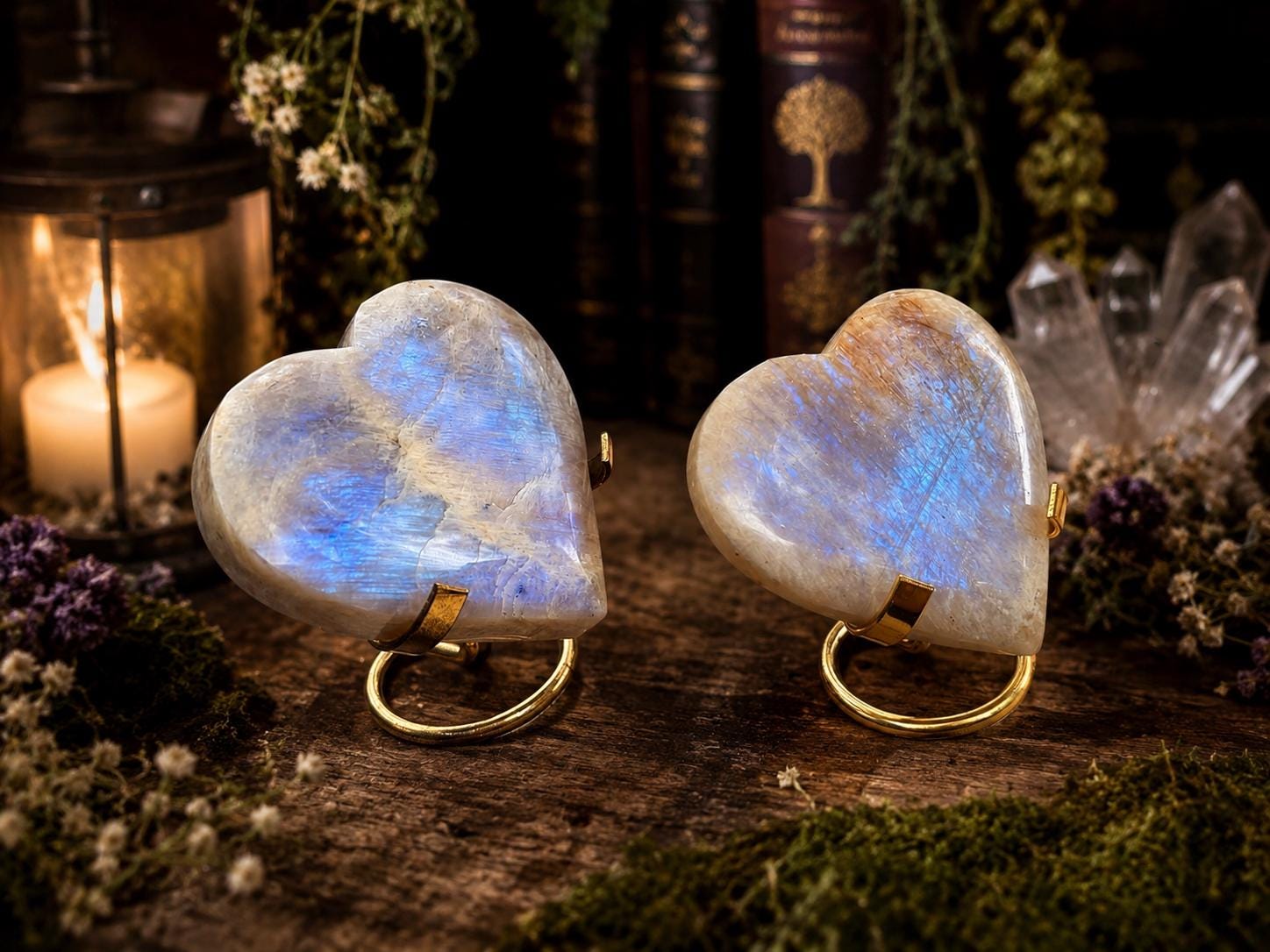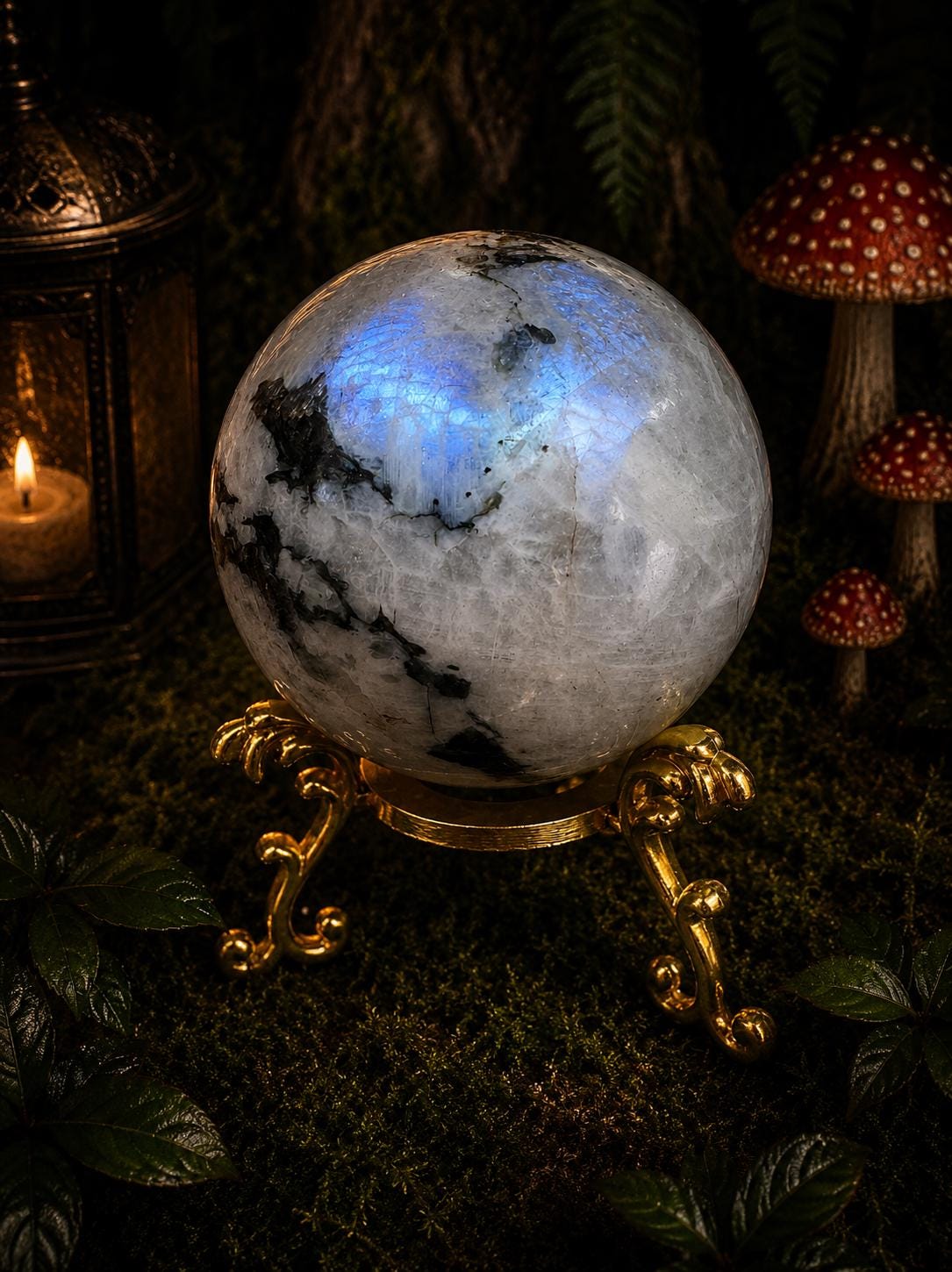
That blue-white shimmer rolling across moonstone is called adularescence — light scattering between hidden layers inside the stone. The Romans thought it was literally captured moonlight, and some nights I’m not sure they were wrong.
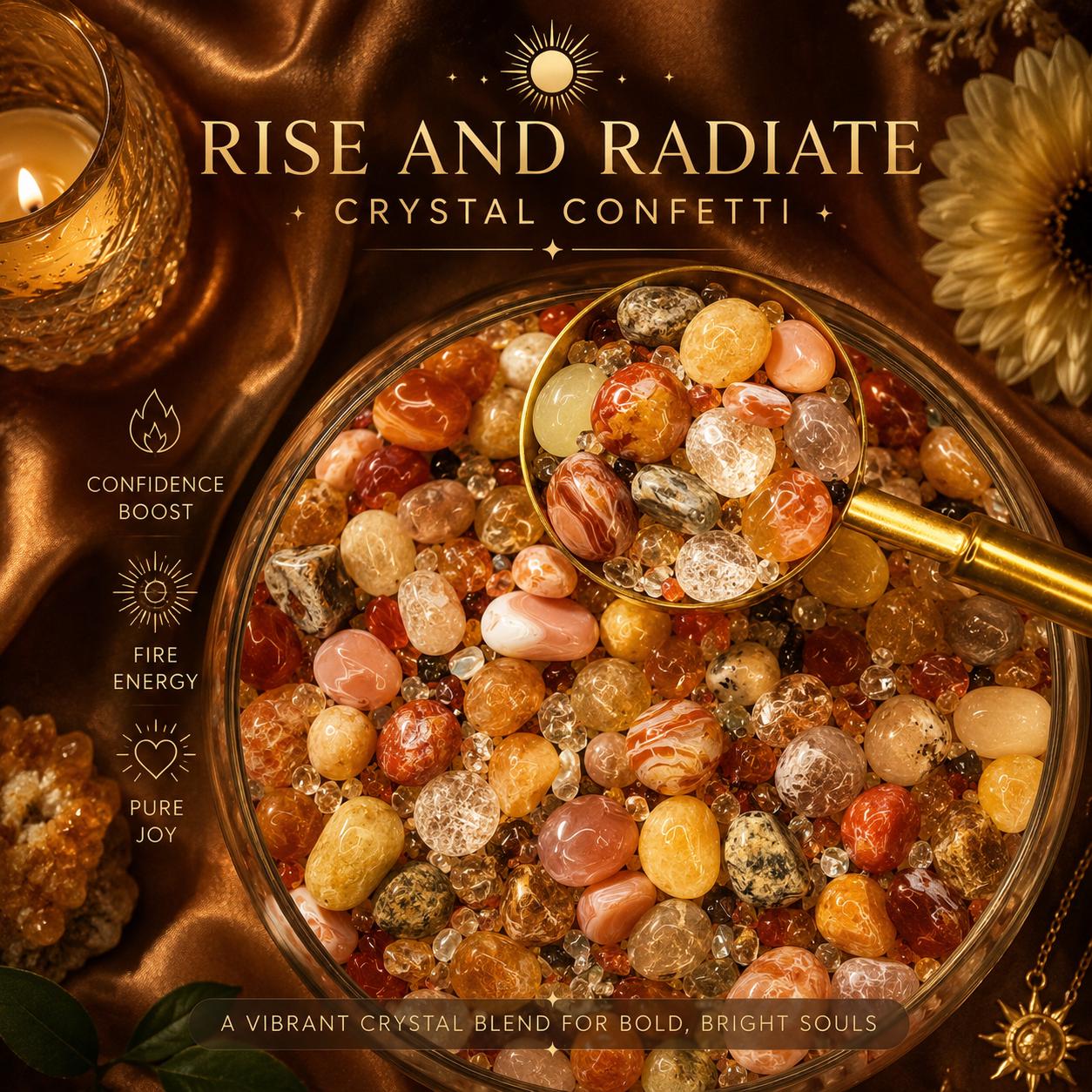
Moonstone is traditionally associated with intuition, new beginnings, and honoring your own cycles and seasons. It’s the quiet, silvery heart of Rise & Radiate — the reminder that rising doesn’t always mean burning.
How moonstone forms
Moonstone is feldspar — the most abundant mineral family in the earth’s crust — doing something exquisitely rare with light. As the crystal cooled, it separated into alternating layers of two feldspars (orthoclase and albite) so thin they rival a soap bubble’s skin. Light slips in, scatters between those layers, and drifts back out as a soft blue-white billow that seems to live inside the stone — adularescence, named for adularia from the Adula Alps, where fine specimens were found near the old town of Mt. Adular.
The finest blue-sheen material has classically come from Sri Lanka, with India, Madagascar, and Tanzania producing lovely peach, gray, and cat’s-eye stones.
A little history & folklore
Rome looked at this stone and concluded, reasonably, that it was solidified moonlight — Pliny wrote that its sheen shifted with the phases of the moon. Hindu tradition holds similar lore, placing moonstone among sacred gems and connecting it to the mind’s tides. It’s a traditional gift for lovers in India; in Europe it was the traveler’s stone, protective especially at night and at sea, and centuries of tradition tie it to fertility, femininity, and the body’s own lunar arithmetic.
Art Nouveau jewelers — Lalique above all — couldn’t leave it alone, and it became June’s birthstone. Even Florida claims it: the state gem commemorates the Apollo missions launched from its coast, despite no moonstone occurring naturally there. Humans simply cannot stop reaching for this stone when the moon is involved.
Working with moonstone
Traditionally moonstone is associated with intuition, cycles, and beginnings — the new-moon stone in a shop that keeps a live moon-phase widget in its footer for good reason. How I use it:
- At the new moon, held while you name what the next cycle is for (my favorite monthly ritual, five minutes, no equipment but this).
- Through any beginning: new home, new baby, new self. Moonstone tradition specializes in thresholds.
- Paired with labradorite, its flashier feldspar sister, or citrine and calcite — moon and sun sharing one blend, the way they share one sky.
Cleanse it the obvious way. Some stones you charge in moonlight because tradition says so; this one, because it would be rude not to.
Caring for your moonstone
☾ Fairly soft; avoid rough tumbles with harder stones. Rinse briefly if you must, but this one was made for moonlight cleansing.