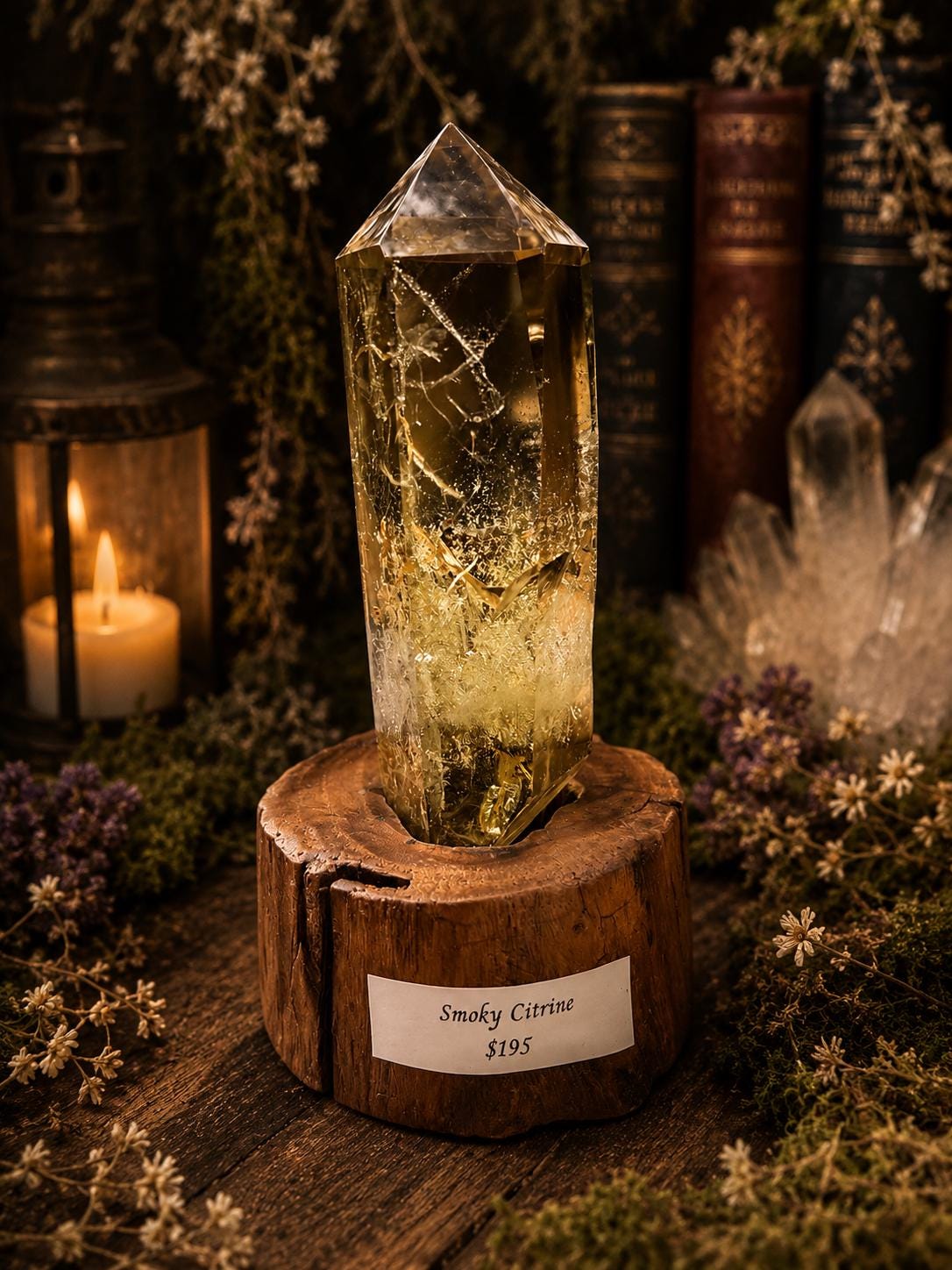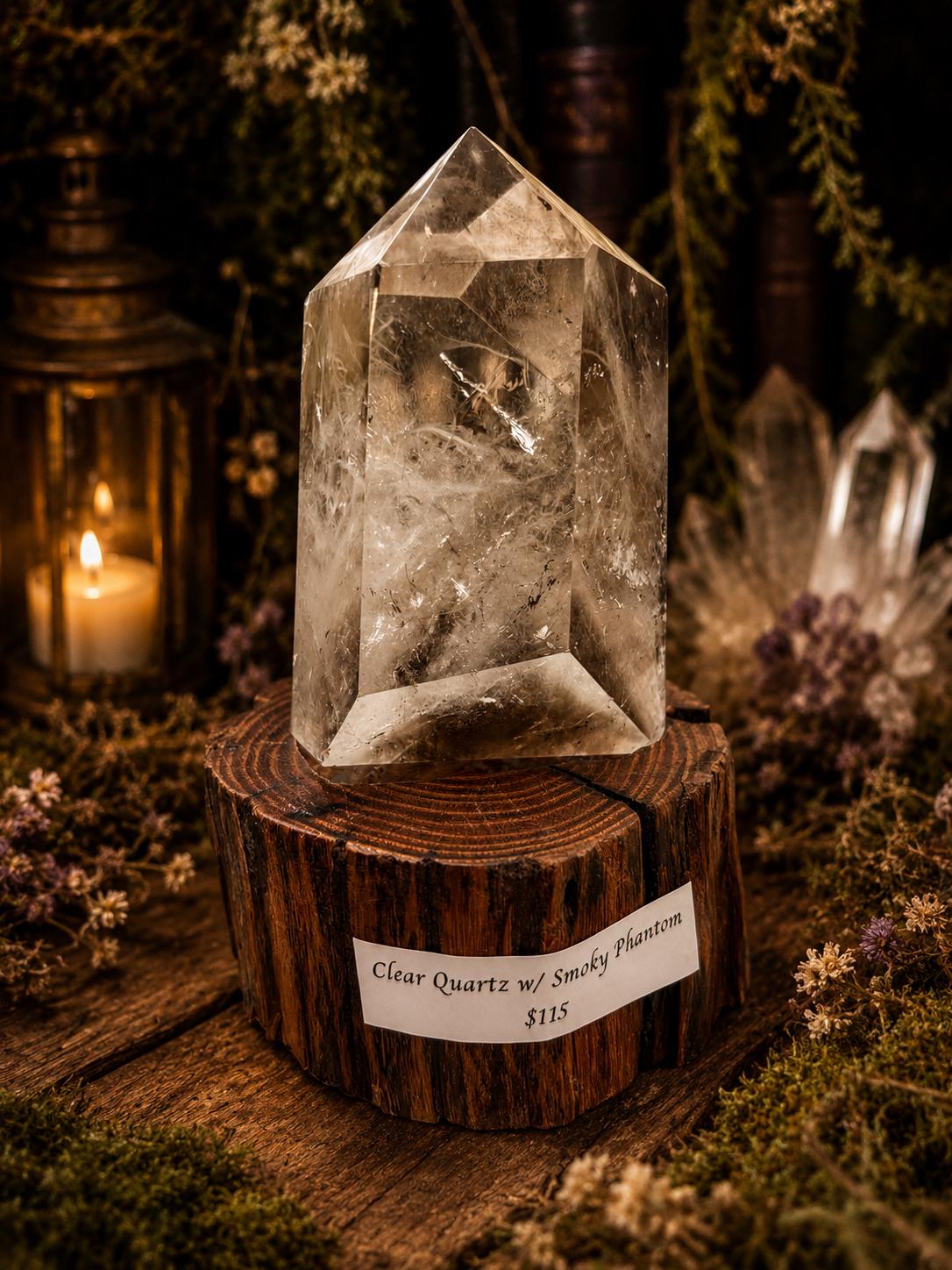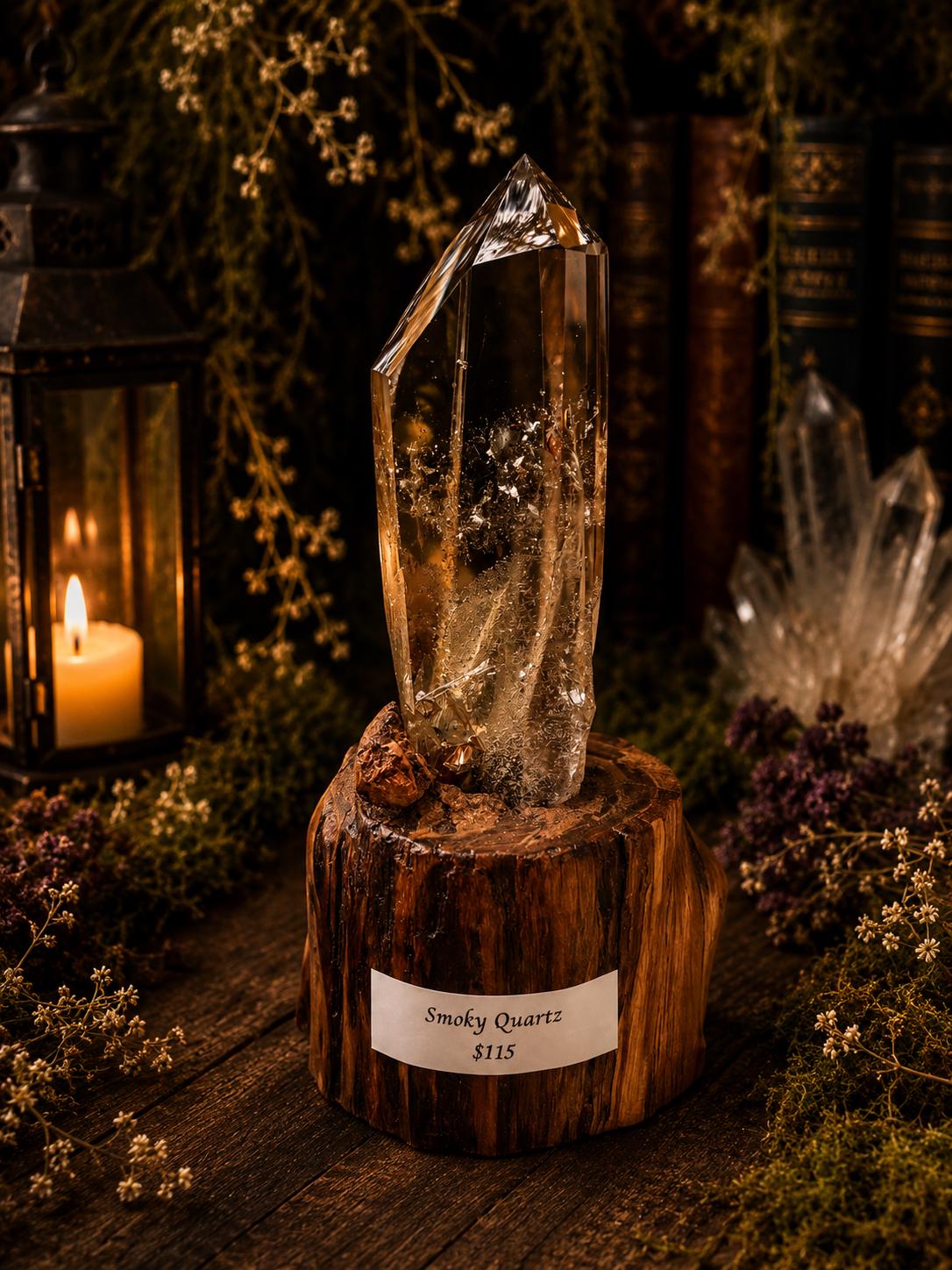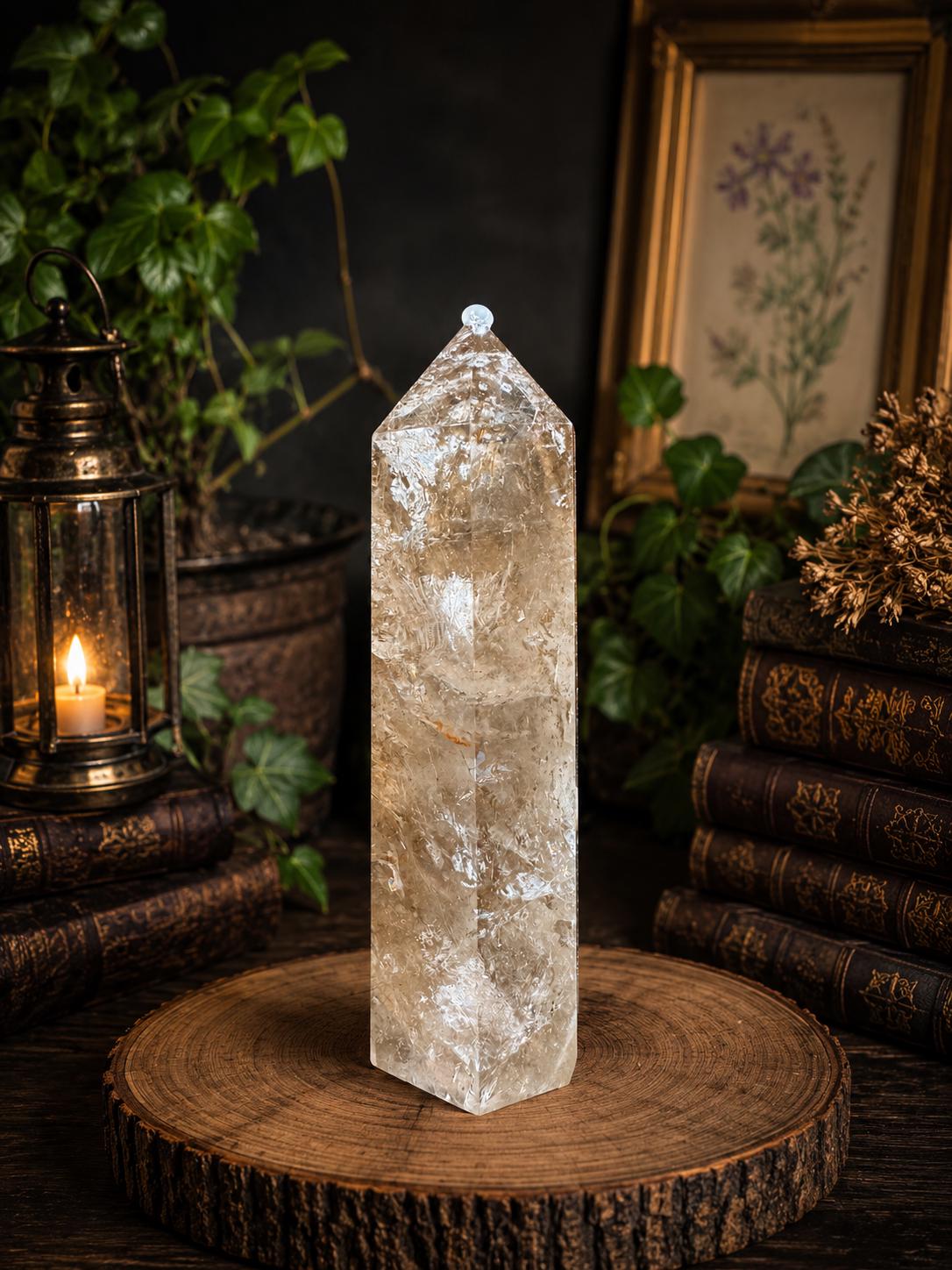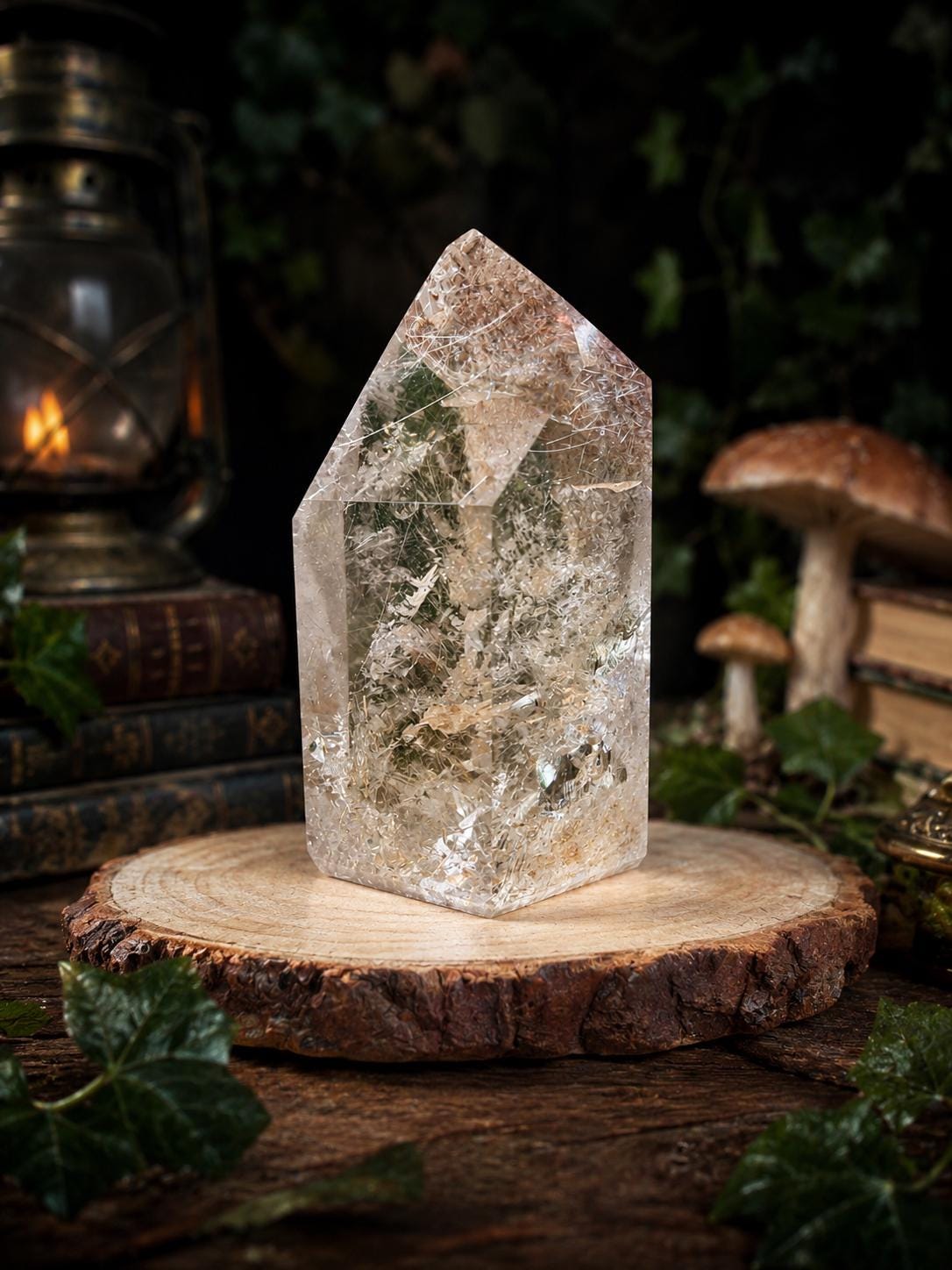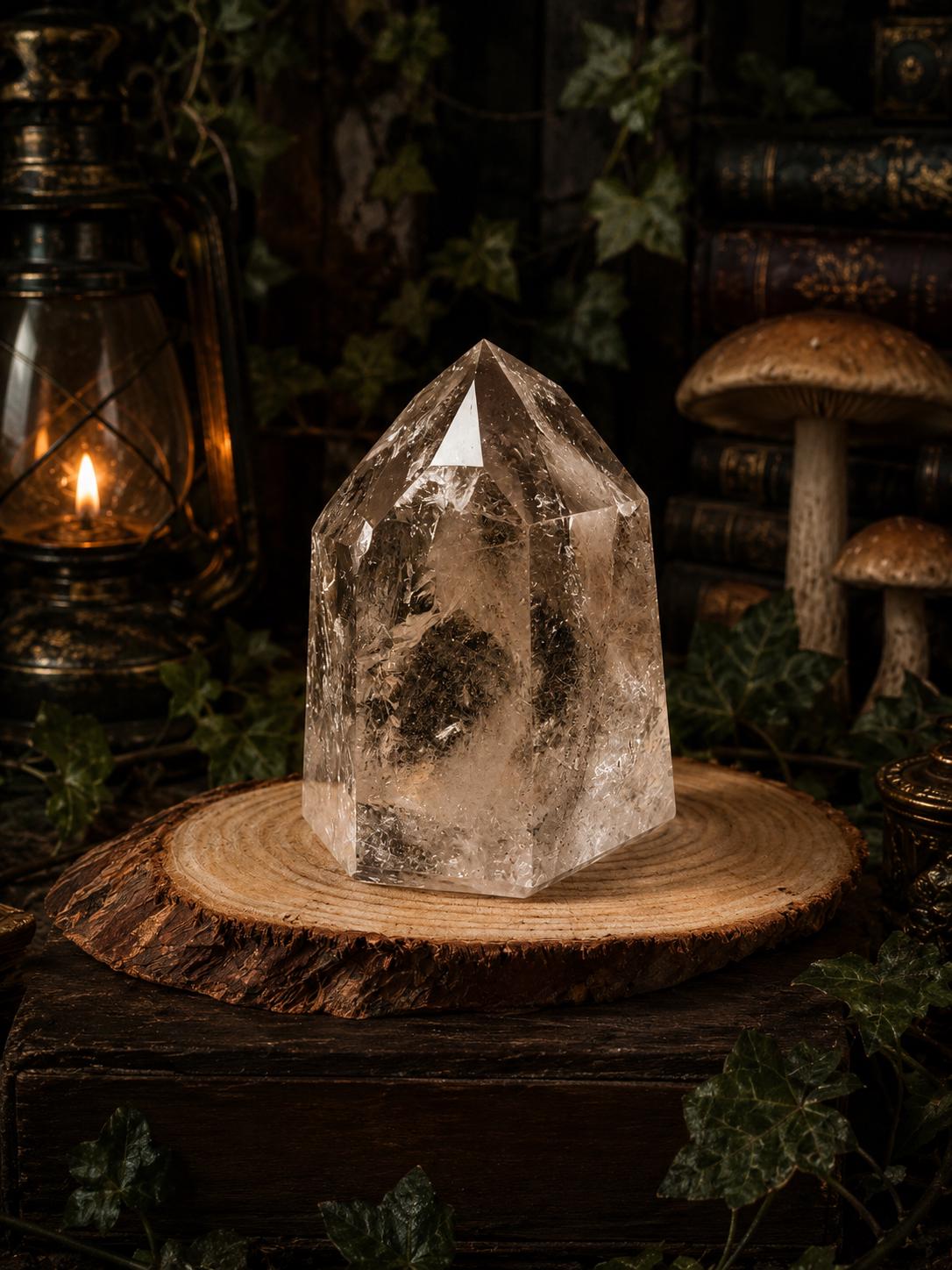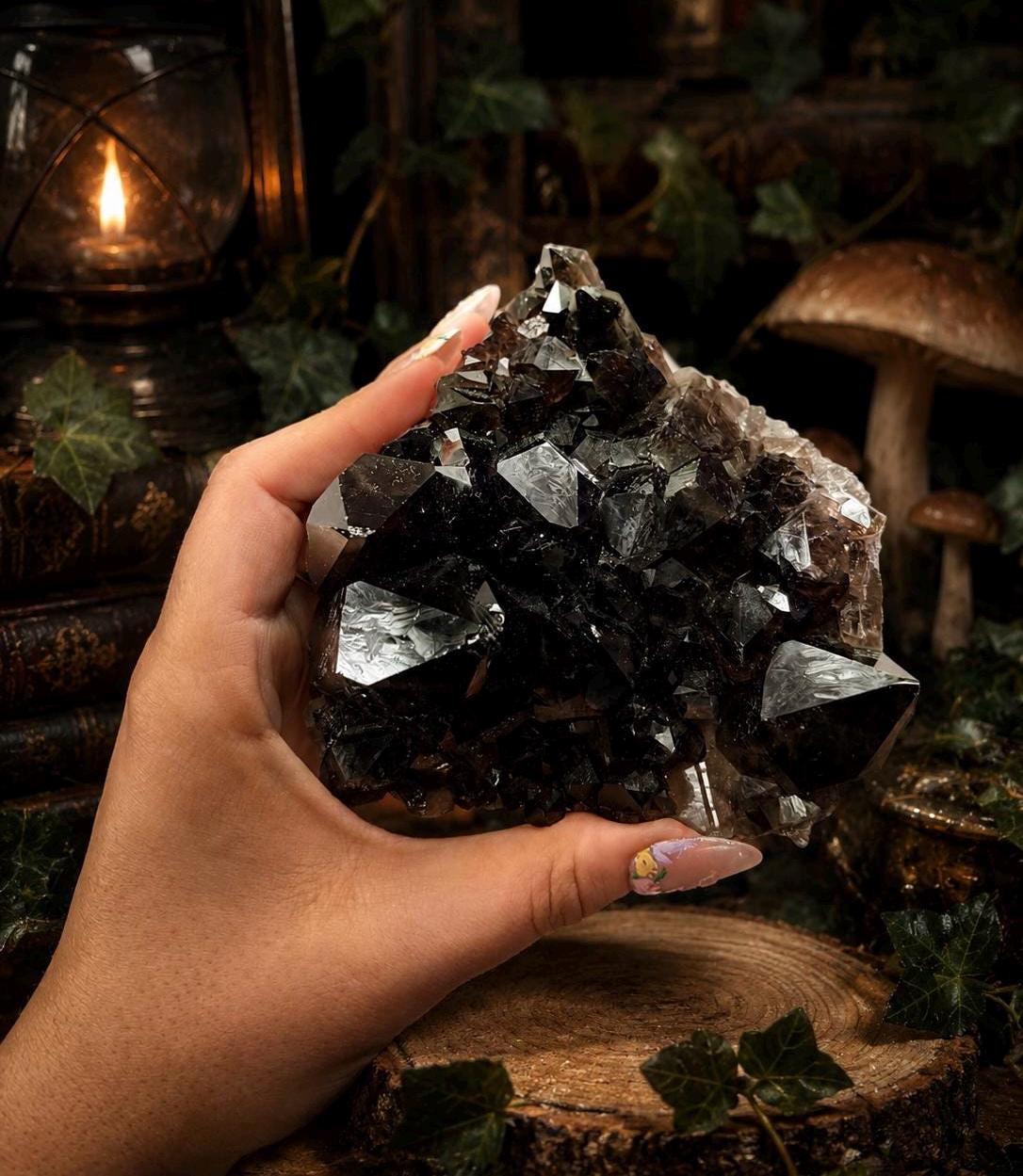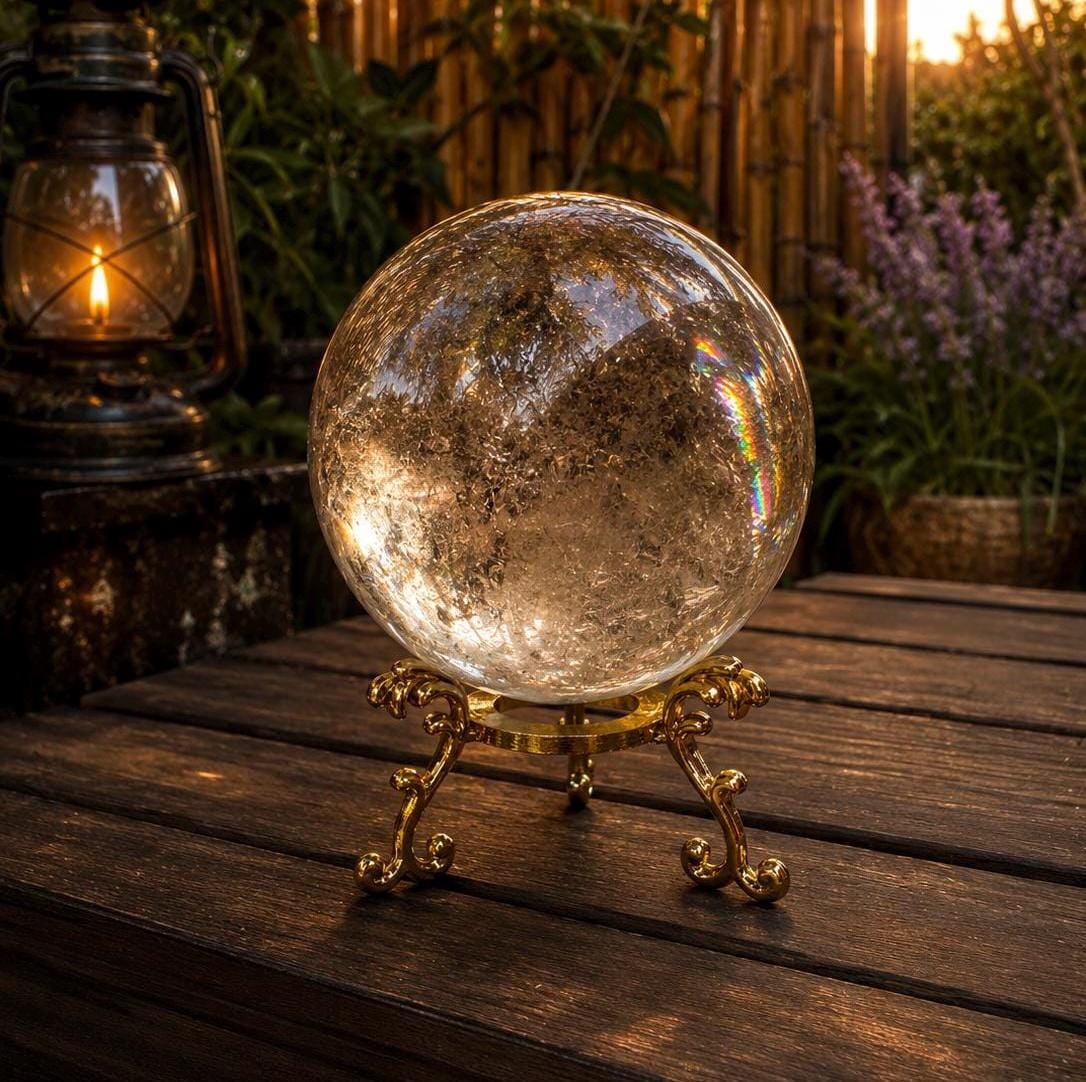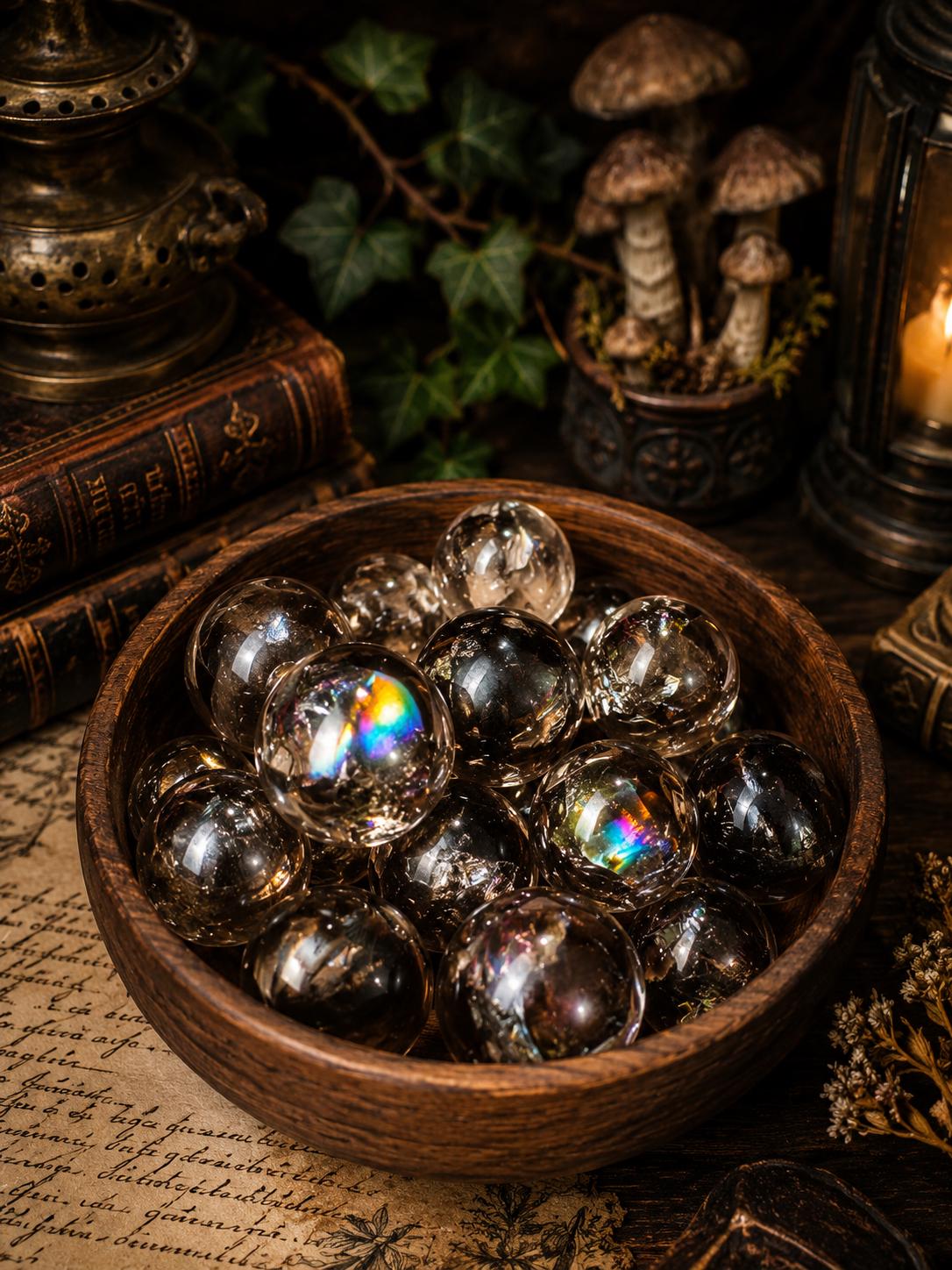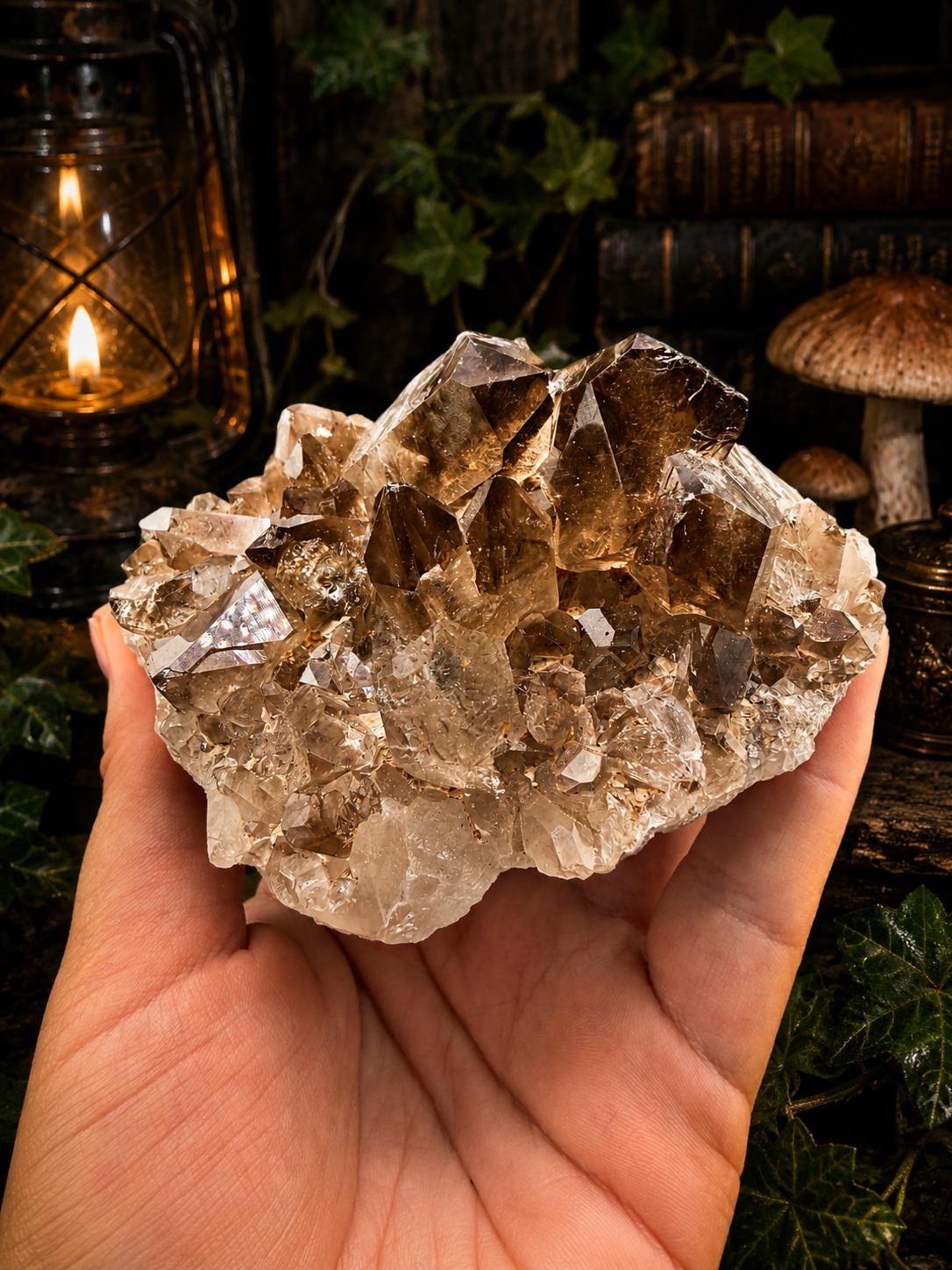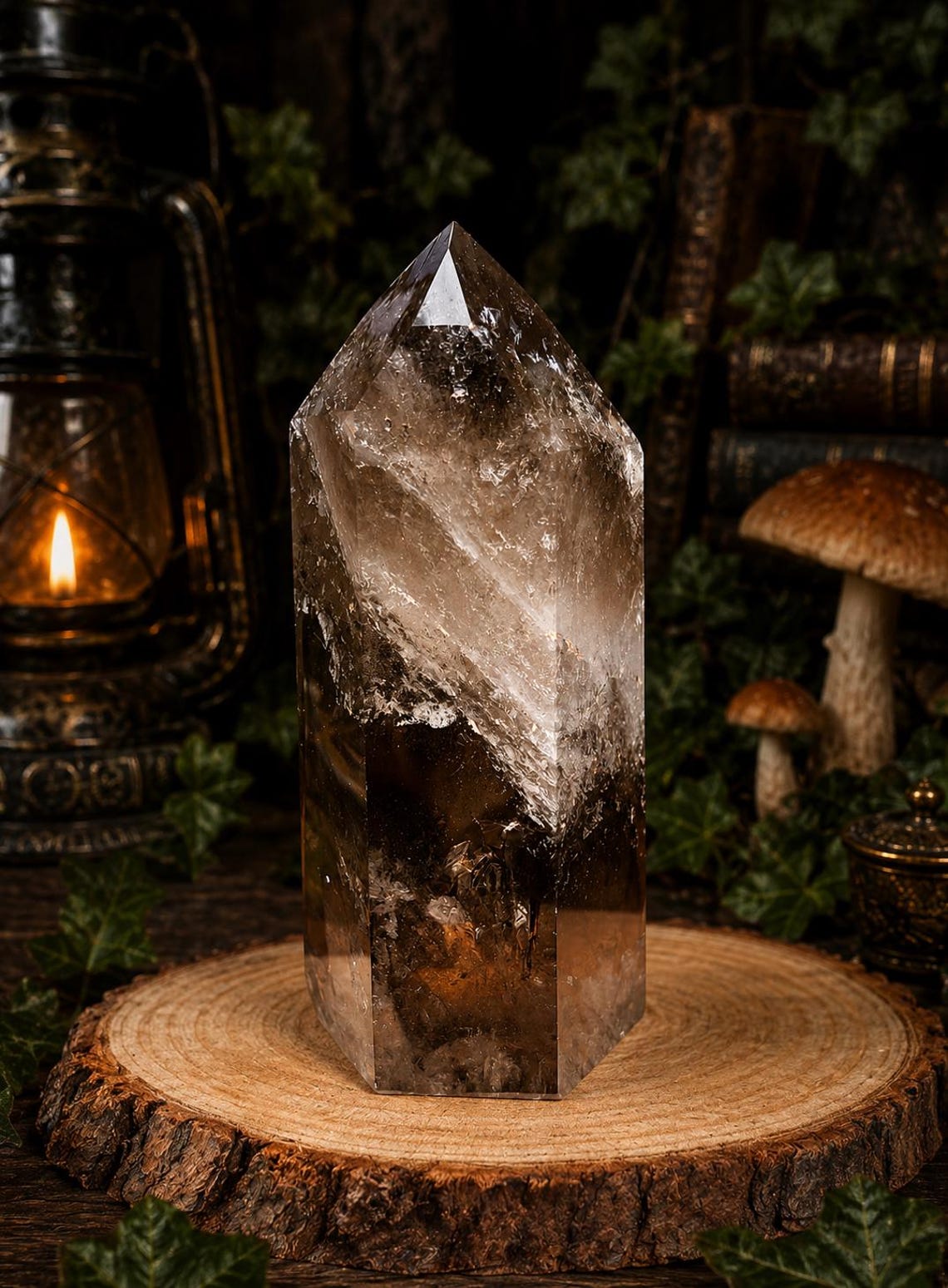
Smoky quartz gets its tea-colored depth from natural radiation deep in the earth — millions of years of pressure turned into something that feels like a deep breath. It’s the stone I hand to people who say everything feels like “too much.”
That color is chemistry with patience: natural radiation from the surrounding rock interacts with trace amounts of aluminum within clear quartz, slowly altering it over time — from soft gray to deep, almost-black hues. It forms in places like Brazil, Switzerland, and the United States, often in large, well-defined crystals, and because the color only develops under such specific conditions, darker and more evenly colored specimens are especially valued.
Traditionally it’s associated with grounding scattered energy, releasing what you’ve been carrying, and shielding your space. I keep a cluster by my front door and a tumble in my pocket on heavy days. It plays beautifully with moss agate, which is why they share a blend.
How smoky quartz forms
Smoky quartz is patience made visible. It starts life as ordinary clear quartz with a whisper of aluminum standing in for the occasional silicon atom. Then the surrounding rock — often granite, which is always faintly, harmlessly radioactive — bathes it in natural radiation for millions of years. That slow exposure builds color centers around the aluminum, and the crystal deepens from clear to tea-brown to nearly black, like the world’s slowest steeping.
The great alpine clefts of Switzerland have produced legendary smoky crystals — strahlers (crystal hunters) have climbed after them for centuries — and Brazil, Colorado, and Madagascar grow beautiful ones too.
A little history & folklore
Scotland adopted smoky quartz so completely that it became the national gem. Found in the Cairngorm Mountains, the local variety — called cairngorm — has crowned Highland kilt pins, brooches, and the pommels of sgian-dubh daggers for centuries. There’s something fitting about a misty gray-brown stone belonging to a misty gray-brown country.
Further back, druidic tradition is said to have held smoky quartz sacred to the dark, grounding powers of the earth, and Chinese craftsmen in the 12th century cut flat panes of it as the first sunglasses. Everyone who met this stone seemed to reach the same conclusion: it takes the harshness out of the light.
Working with smoky quartz
Traditionally smoky quartz is associated with grounding, protection, and release — less a shield than a drain, taking the static down and out. How I use it:
- By the front door, so the day’s heaviness gets left at the threshold with your shoes.
- A tumble in the pocket on overwhelming days; when the noise rises, hold it and let your shoulders drop.
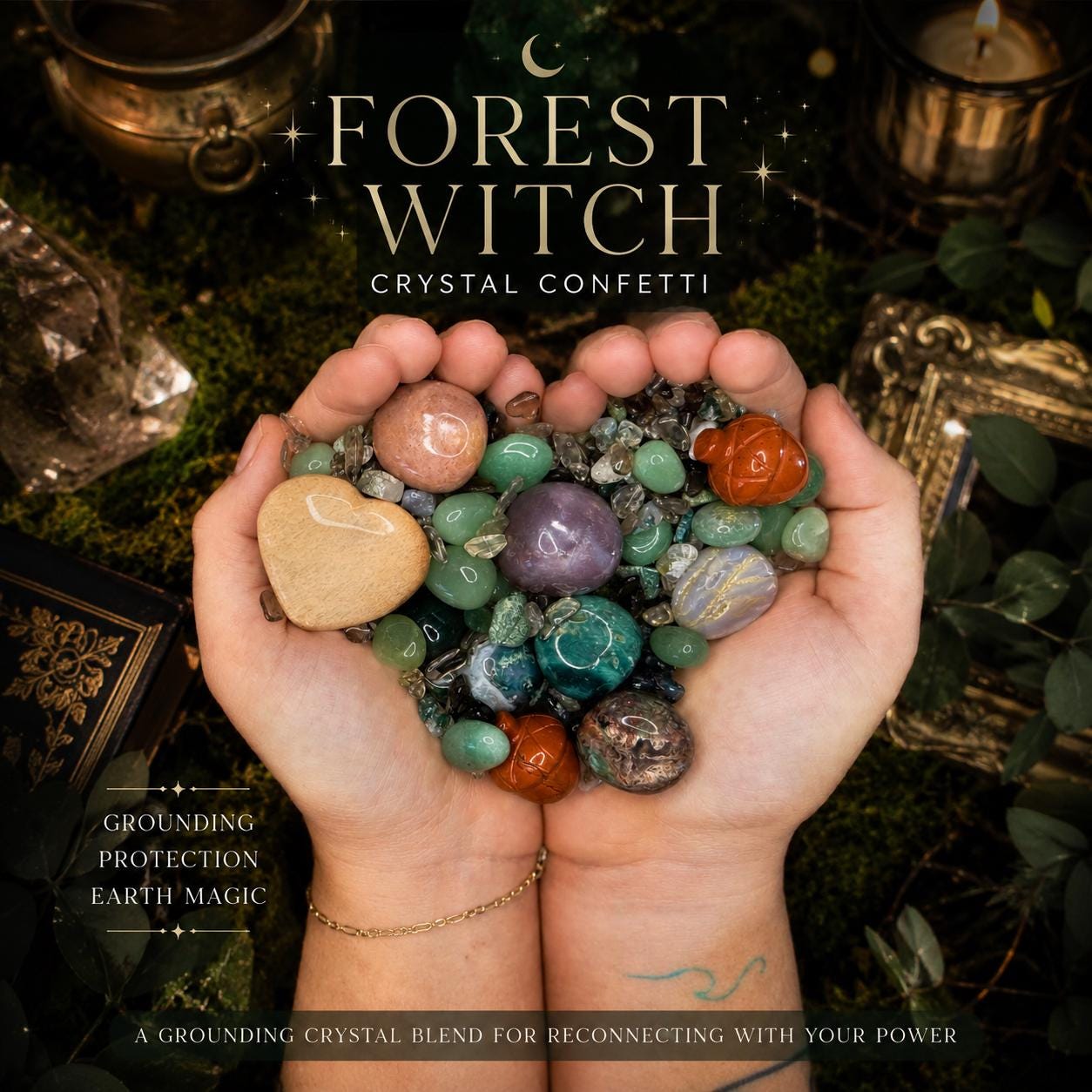
- Paired with moss agate and green aventurine — the trio at the heart of my Forest Witch blend — for grounding that still lets things grow.
If clear quartz is a clear sky, smoky quartz is dusk: same sky, but it lets you rest.
Caring for your smoky quartz
☾ Durable and water-safe, but its color can fade in strong, prolonged sunlight — cleanse this one under the moon instead.